Wondering how much you could save by upgrading your air conditioner? Our SEER savings calculator gives you a clear, instant estimate. Enter a few details about your current system and the unit you are considering, and you will see your projected savings per year and over the life of the equipment. No guesswork, no sales pitch, just the numbers.
What Is SEER (and SEER2)?
SEER stands for Seasonal Energy Efficiency Ratio. It measures how much cooling an air conditioner or heat pump delivers for the energy it uses across a typical cooling season. The higher the SEER number, the less electricity the system needs to keep your home comfortable, which means a lower bill.
As of January 1, 2023, a newer rating called SEER2 replaced SEER as the official standard. SEER2 uses the same basic idea but tests units under more realistic conditions, so the numbers run slightly lower. A 16 SEER2 unit is roughly equivalent to about a 16.8 SEER unit under the old test. If you are comparing an older system to a new one, you are usually comparing a SEER rating to a SEER2 rating, and that is fine. The calculator handles the comparison either way.
How the Calculator Works
The estimate comes down to four inputs. The more accurate your numbers, the more accurate your result.
- The SEER rating of your current system. This is the efficiency of the AC you have now. Older units often sit at 8 to 10 SEER, which is where the biggest savings tend to show up.
- Your system size, in tons. Tonnage measures cooling capacity, not weight. One ton removes 12,000 BTUs of heat per hour, so a 3-ton unit removes 36,000 BTUs per hour.
- Your electricity rate, in cents per kilowatt-hour. You will find this on your utility bill. The U.S. average is around 16 cents per kWh, but rates vary widely by state, so use your real number for the best result.
- Annual cooling hours for your area. Hotter, longer summers mean more run time and more potential savings. A common national estimate is about 2,100 hours per cooling season, though somewhere like Texas or Arizona will run well above that.
The calculator estimates what your current system costs to run each year, then compares it to a higher-efficiency unit and shows the difference over one year, five years, and beyond.
Example: What an Upgrade Can Save
Say you have a 3-ton, 10 SEER air conditioner, your electricity rate is 16 cents per kWh, and your system runs about 2,100 hours a year.
- Your current 10 SEER unit costs roughly $1,210 per year to run.
- A new 16 SEER unit costs roughly $756 per year.
- That is about $454 in savings every year, or close to $6,800 over 15 years.
Move to a 9 or 8 SEER starting point, a higher electricity rate, or a longer cooling season, and the gap widens fast. That is why upgrading an old, inefficient system often pays for a meaningful share of itself in energy savings alone.
How to Find Your Current SEER Rating
You will need your existing system's rating to run an accurate comparison. Here is how to find it:
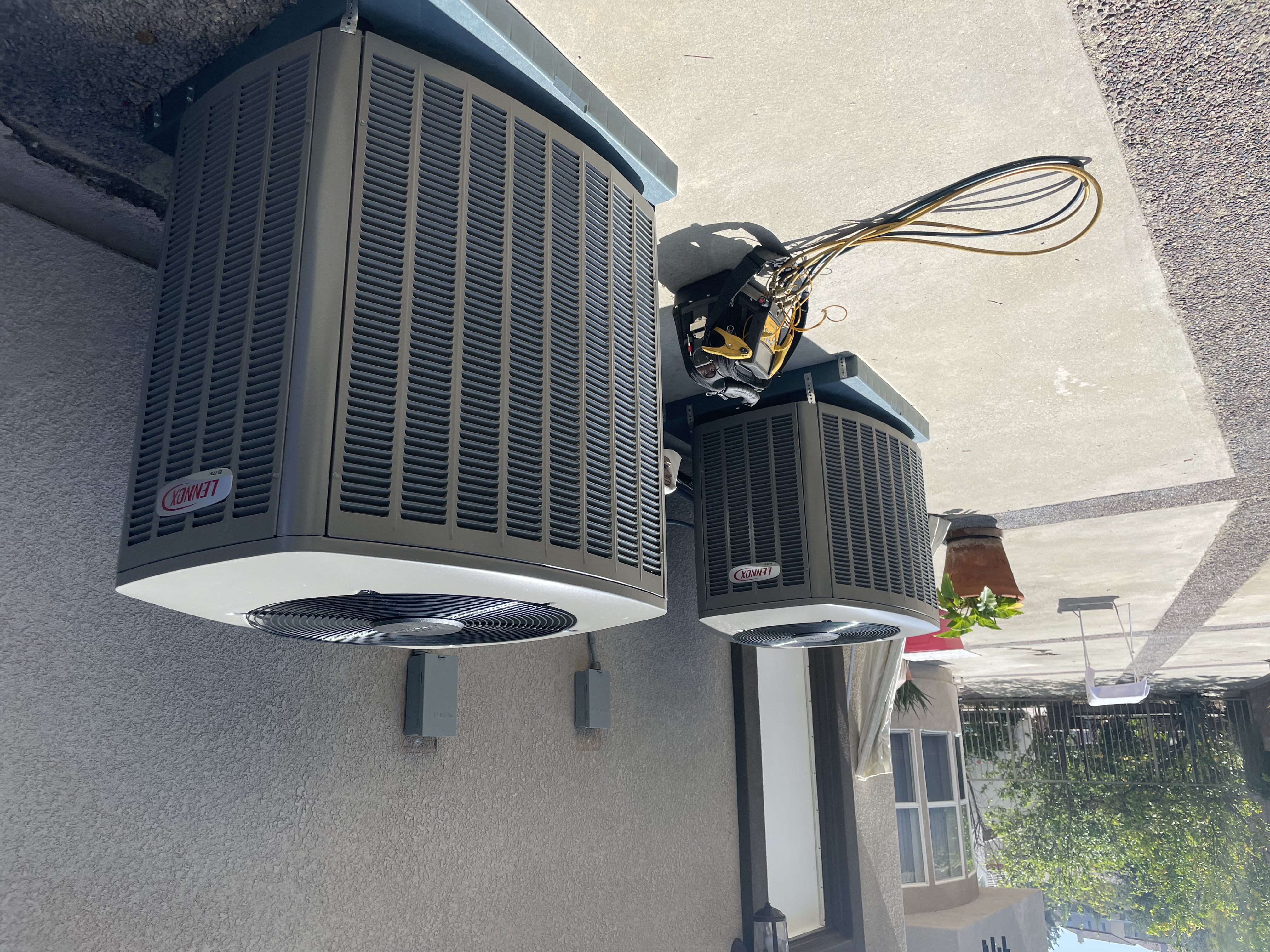
- Check the condenser. Look for a bright yellow EnergyGuide label on the outdoor unit. Many systems list the SEER rating right there.
- Check the air handler. If the outdoor label is faded or missing, the indoor air handler (often in a closet, attic, or garage) may have a sticker with the system specs.
- Look up the model number. Find the model and serial number on the unit, then search the manufacturer's site or call their support line. As a quick shortcut on many units, the model number contains a figure divisible by 12 that signals tonnage. A "036" usually means 3 tons.
If you cannot find a rating at all, the unit is likely old enough that an upgrade will show strong savings.
A Note on Matched Systems
Your outdoor condenser and indoor air handler need to be a matched set to hit their rated efficiency. If a previous installer paired mismatched components, the system probably will not reach the SEER number on its label, and your real-world costs run higher than the rating suggests. A quick check from a licensed technician will confirm whether your equipment is properly matched.
What Counts as a Good SEER2 Rating Today
Minimum efficiency standards are set by region. In the North, new split-system air conditioners must hit at least 13.4 SEER2. In the Southeast and Southwest, the minimum is 14.3 SEER2. Most homeowners shopping for a new system today look at the 15 to 18 SEER2 range, where the balance of upfront cost and long-term savings tends to make the most sense. Premium variable-speed units climb higher, into the low 20s, and deliver the lowest run cost along with quieter, more even cooling.
A higher rating is not automatically the right call for every home. The best choice depends on your climate, how long you plan to stay, your electricity rate, and the size your home actually needs. The calculator is the fastest way to see where the savings curve flattens out for your situation.
Is It Worth Upgrading?
If your system is more than 10 to 15 years old, sits below 13 SEER, or is starting to need regular repairs, an efficiency upgrade usually makes financial sense, and the savings compound every year you run the new unit. Run your numbers above to see your estimate, then talk to a trusted local HVAC professional about the right size and efficiency for your home.
This calculator provides a rough estimate for planning purposes. Actual savings depend on your equipment, installation quality, usage, and local energy rates.