It is a warm late-summer evening in the San Gabriel Valley, with September heat still ahead. The windows are open for the first cool air of the night, or the air conditioner is running through one more hot stretch, and out of nowhere the house smells like a skunk walked through the living room. Nobody saw one, and the smell seems to be coming from the vents.
A sudden skunk smell in the house almost always comes down to one of four things: an actual skunk nearby, a natural gas leak, a dried-out drain trap, or something that died in a wall or attic. Your nose cannot reliably tell those apart. Is it dangerous? The one worth ruling out fast is a gas leak, so that is where we start. A live skunk under the house is a wildlife question, not an air quality emergency, and an unexplained smell is a reason to find the entry path, not to panic.
It comes up most in older homes in the canyon-edge communities, from the foothill neighborhoods around Altadena to the streets in Monrovia and Eagle Rock that sit against open space. And when the smell is in every room at once, the way your house moves air is part of the story.
First, Rule Out a Natural Gas Leak
Skunk and gas get confused for a real chemical reason. Skunk spray gets its punch from thiols, sulfur-containing compounds with a rotten egg edge, and Smithsonian Magazine explains that thiols are also what utilities add to naturally odorless natural gas so a leak can be smelled. That odorant is commonly called mercaptan, and a half-asleep nose at eleven at night can struggle to tell the two apart.
If the smell is strongest near the furnace, water heater, stove or gas meter, or you simply cannot explain it, treat it as gas until you know otherwise. Leave the house right away and call SoCalGas at 1-800-427-2200 from a safe location. On the way out, SoCalGas guidance on gas leaks says not to smoke or light a match or a candle, and not to turn appliances or lights on or off or start a vehicle, since any of it can spark. Call 911 from a safe location if there is damage that could endanger life, cause injury or damage property. Do not go hunting for the source yourself, and do not try to stop a leak or repair anything.
SoCalGas also describes a look, listen and smell check: damaged connections at a gas appliance, dirt or water blowing into the air, a dry patch of grass, a hissing or whistling sound, and the odor itself. They caution that the odor can fade in some pipe conditions, so a faint or on-and-off smell near a gas appliance still deserves the call.
Carbon monoxide, which the EPA describes as odorless and colorless, can come from furnaces, gas stoves and other fuel-burning appliances, and that is exactly why CO alarms exist. If what you are noticing is not skunky at all, we have covered other furnace odors that are worth taking seriously separately.
If It Is Not Gas, It Is Usually an Actual Skunk
Once gas is off the table, the most common answer to "why does my house smell like skunk" is simply a skunk. The University of California's guidance on skunks notes that in developed areas they den under decks, under porches and beneath buildings. A raised foundation with a crawlspace, a gap under a porch, or a foundation vent with a torn screen is exactly that kind of void, and our older housing stock is full of them.
That is why this is so familiar in homes in La Canada Flintridge that back up to the canyons, where a yard at the wildland edge offers insects, grubs, fruit and pet food for dinner and a dry place to sleep.
What a skunk actually smells like
Fresh skunk spray is sharp and sulfurous, with a rotten egg character from those thiols. A biologist at the Smithsonian's National Zoo says it can be smelled a half mile away, and the University of California notes a skunk can aim it accurately at targets 6 to 10 feet away. It lingers on fur or a roadway long after the skunk has gone, so one startled in a neighbor's yard is all it takes, and calm night air carries the smell to an open window or a foundation vent.
Why you notice it at night
If the smell shows up after dark and is gone by breakfast, that fits. The University of California describes striped skunks, the common species here, as primarily active at dawn, dusk and at night, though they can be out in the daytime in areas people use.
A skunk denning under the house, or one acting sick, is not something to approach or handle. The California Department of Fish and Wildlife notes that skunks release their musk when threatened or scared, and flags disease concerns, including rabies.
Why a Skunk Smell in the House Reaches Every Room
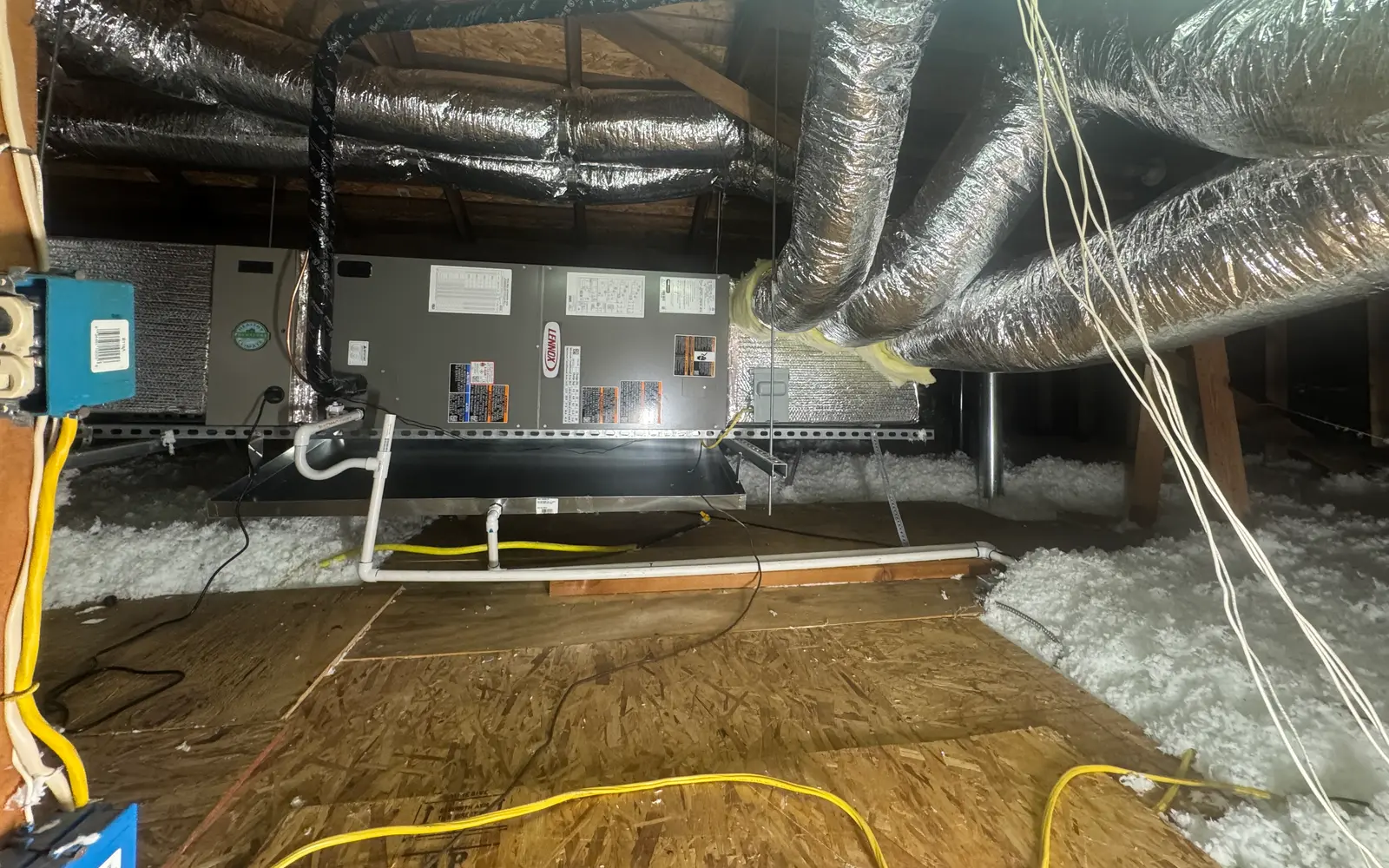
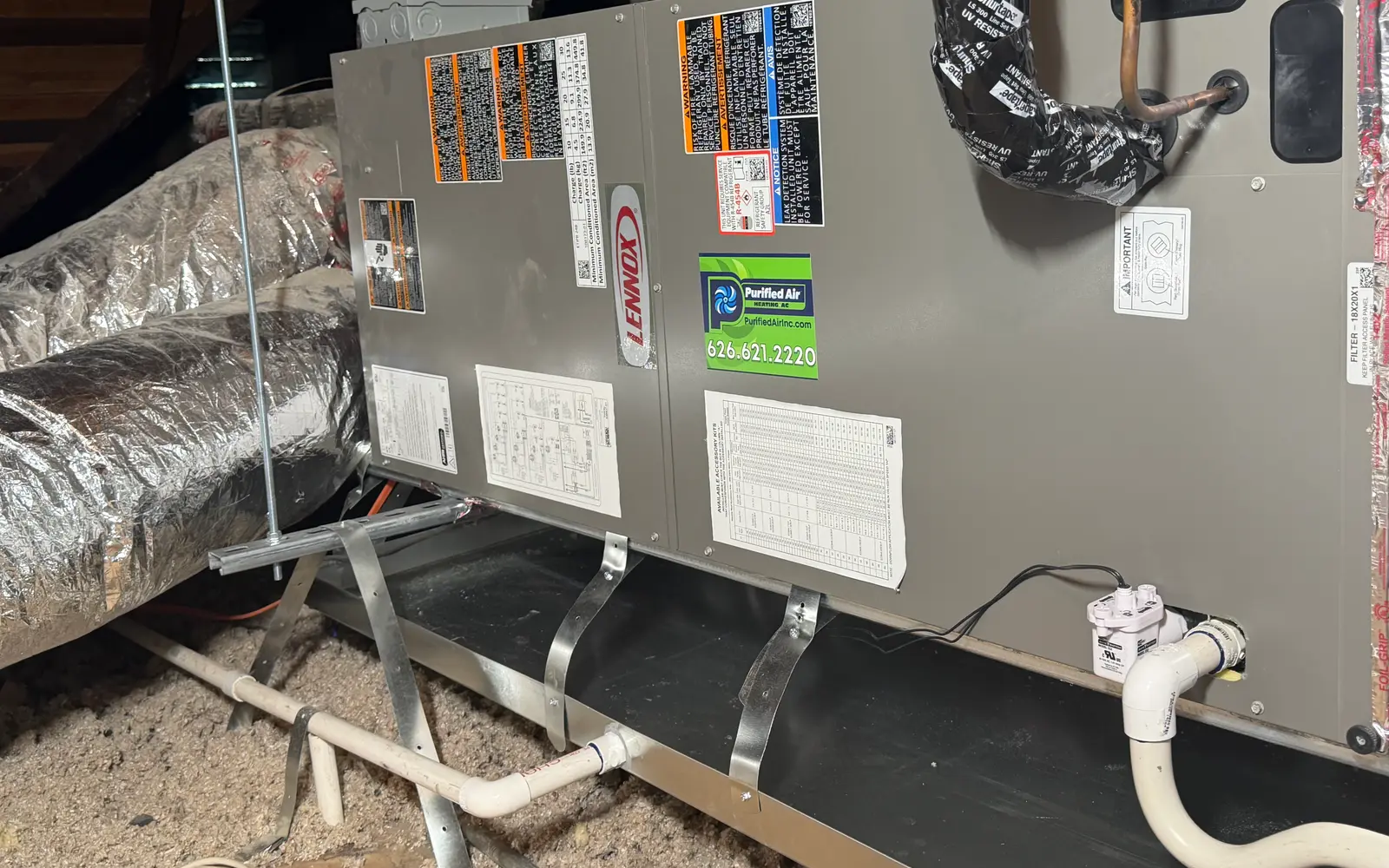
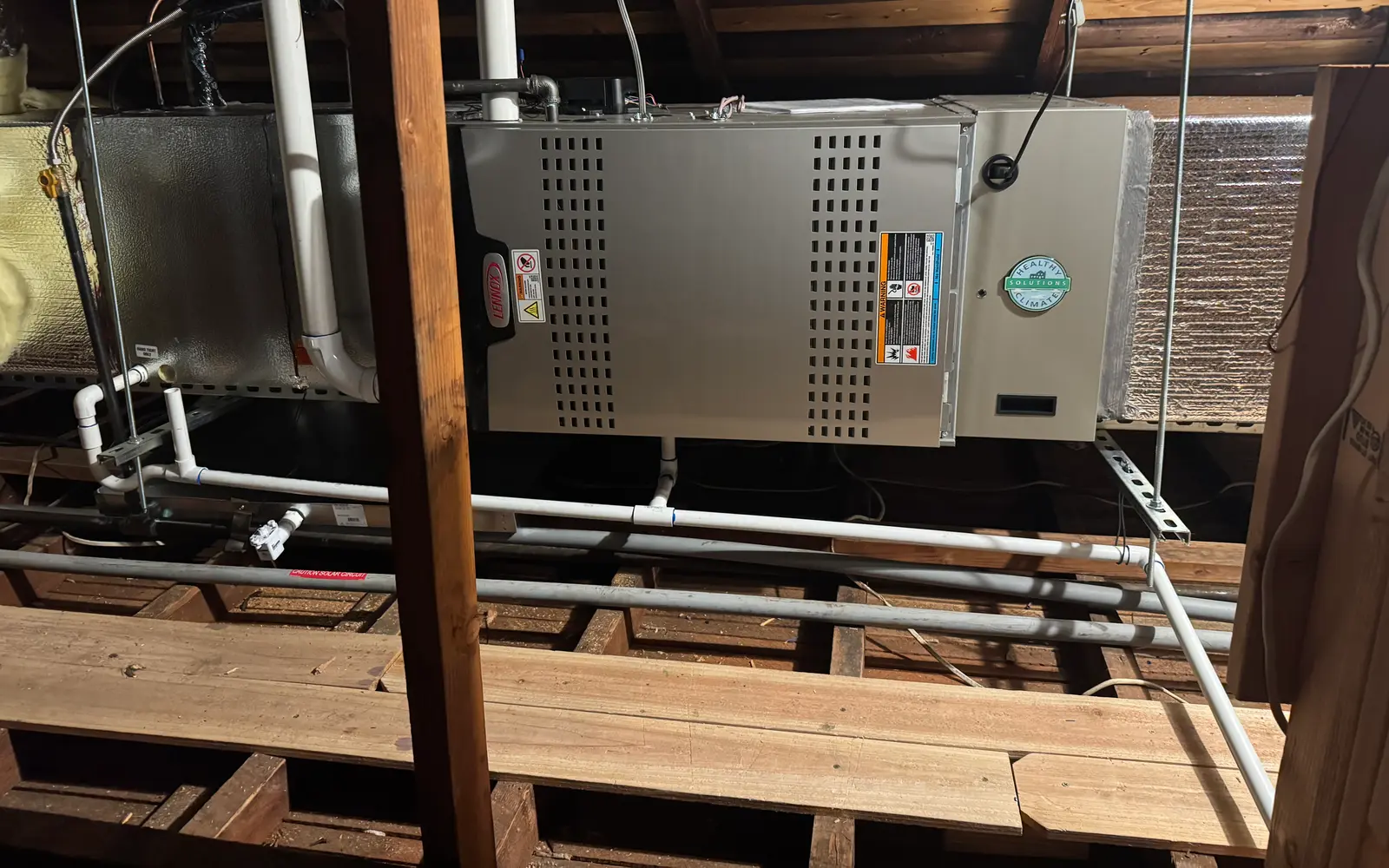
Your system does not just blow conditioned air into rooms. It also pulls air out of the house through the return, the grille and ductwork that carry air back to the furnace or air handler to be conditioned and sent out again, and in most of our older homes that return path runs through the attic or crawlspace.
The return side pulls, and if it cannot get all the air it wants from inside the house, it takes the difference wherever it can find it. That is negative pressure. Every unsealed joint, loose return connection or gap around a duct boot becomes a small intake, and attic or crawlspace air gets drawn in, mixed into the supply air and delivered to every room, including rooms nowhere near where the skunk was.
That is why "it smells like skunk in the whole house" is such a common complaint. We see the setup for it constantly in 1920s to 1940s Craftsman and Spanish homes with raised foundations, where the ductwork was retrofitted decades later and the return plenum was never sealed to a modern standard. Our guide on how to spot a leaking duct system without any tools will tell you whether yours is one of them.
One honest stopgap while you sort out the source: switch the system off at the thermostat. It is not a fix, but it stops the recirculation. And despite a claim you may run into online, a skunk smell from the vents does not point to a refrigerant leak. It points to where the return is getting its air.
Whatever a leaky return pulls in is not limited to the odor you notice: attic dust and allergens ride along too, and with fall wildfire season ahead, that is a real question about the air quality in your home as a whole. A skunk is often just the first thing strong enough to get noticed.
Two Things That Smell Like Skunk But Are Not
If there is no gas and no skunk and the smell lives in one room, two ordinary household causes explain most of what is left.
A drain trap that has dried out
Under every sink, shower and floor drain is a P-trap, the curved section of pipe that holds a little water so sewer gas cannot come up into the room. When a drain goes unused, that water evaporates and sewer gas comes through. One municipal sewer district's plain explanation of dried-out drain traps names three causes: a rarely used drain, a vacant property, and hot or dry weather.
Our late July through September stretch is exactly that weather, so the guest bathroom nobody uses, the laundry sink and the garage floor drain are the usual suspects. A dry trap is a single fixture problem, which is why this smell stays put in one room.
The fix is simple: run water in every sink, shower and floor drain at least once a month, and a little mineral oil on top of the water slows evaporation in a drain that is almost never used. If the smell persists after the trap is refilled, that is a licensed plumber's call.
Something died in a wall, an attic or a duct chase
Attics, wall voids and ceiling voids are ordinary rodent habitat, and in most of our older homes they are the same spaces the ductwork runs through. House mice seldom range more than 30 feet from their nest and food supply, so the odor usually sits close to where the animal had been living: strong in one hallway, absent two rooms away.
Rodenticide is a common reason a rodent dies inside the structure, and the University of California's pest management program treats the resulting odor as a recognized problem, not a fluke. The sealing standard is the same one that keeps a skunk out from under a porch: close every gap larger than a quarter inch with steel wool, wire screen or sheet metal, since plastic, foam, wood and caulk are not adequate.
If the smell moves around the house with the system running, our post on how ductwork spreads odors and dust around a house goes deeper.
Who Fixes What: Ducts, Wildlife, Drains and Gas
Here is who to call for each of the four, and we will be honest: three of them are not us.
- A gas smell: SoCalGas, from a safe location, and 911 if there is damage that looks dangerous or you cannot reach them.
- A live skunk under the house: a licensed, humane wildlife exclusion service. One local example is Pasadena Humane's Humane Exclusion Service; its wildlife helpline is staffed 9:30 a.m. to 5:30 p.m. and prefers a text, so treat that as a next-morning call.
- A drain that still smells after you refill the trap: a licensed plumber.
- The gaps that let outside and under-house air reach the air you breathe: that one is ours.
Sealing return leaks, reconnecting duct runs that have pulled apart, and closing the openings around boots and plenums in the attic or crawlspace all fall under sealing and repairing the ductwork itself. That work also keeps attic dust and crawlspace air out of your supply air the rest of the year.
And a skunk smell does not mean your ducts are dirty. Cleaning removes what has built up inside the duct, and has its own good reasons, but it does not close the opening that let the odor in, so this is a repair, not a cleaning. That distinction comes up a lot in Arcadia households with raised foundations and original crawlspace ductwork, where the return may have been drawing a little under-house air for years.
How Long Does the Smell Last, and What Actually Clears It
The honest answer is that there is no reliable timeline, and anyone who gives you a firm number of days is guessing. How long a skunky smell lingers depends on what it was, how much got in, and whether the entry path is still open.
A few things genuinely shorten it:
- Close the entry path first, whether that is a torn foundation vent screen, a dry trap or a leaky return. The smell keeps arriving until you do.
- Air the house out on a cool evening or early morning, windows open and exhaust fans running.
- Change the air filter. One that has spent days pulling odor-heavy air through it is reasonably going to hold some of that smell.
Two things do not help. Ozone generators sold as air cleaners are the big one: the EPA's assessment of ozone generators sold as air cleaners states that at concentrations that do not exceed public health standards, ozone has little potential to remove indoor air contaminants, and that inhaled ozone can damage the lungs, with relatively low amounts causing chest pain, coughing, shortness of breath and throat irritation. Masking sprays, scented candles and plug-ins are the other: they cover a smell rather than removing it.
And if the episode has left you wondering what is actually in your air, there are practical ways to test the air in your home for yourself before deciding whether you need anyone at all.
When It Is Worth a Look
The order is the whole point: rule out gas, then look under the house, then check the quiet drains, then ask why the smell reached every room. A skunk smell that arrives once and fades is usually just a skunk. One that keeps finding its way inside is telling you something about how your house breathes.
If you would like someone to look at your ductwork and tell you plainly what else it is pulling in, we are glad to. Purified Air is a family-owned, Lennox Certified team serving Pasadena and the surrounding San Gabriel Valley, and clean, healthy indoor air is what we do. Call us at 626-621-2220.