By late summer in the San Gabriel Valley, the house has been shut tight against the heat for weeks. The afternoons over the foothills look hazy, someone in the family is sneezing more than usual, and a question that was easy to ignore in spring starts to nag: what are we actually breathing in here?
Here is the honest answer to how to test air quality in your home: there is no single number that tells you. Air quality is several different things, and a couple of them need their own test. The first checks are free, the next ones are simple, and a professional only comes in when those steps leave a question open.
Across the neighborhoods we cover around Pasadena, this question almost always starts with a symptom or a smell rather than a reading. So that is where we start.
What Testing Your Air Actually Means
A home air quality test is not one gadget and one score. It is a short series of separate looks, and the sections below take them in the order we would run them.
The EPA's guide to indoor air quality sets a sensible frame. Aside from radon, which it recommends measuring in every home, it says measurements are most useful when there are health symptoms or signs of poor ventilation. You do not have to buy anything to start, or test for everything at once.
Start With What You Can See and Smell
Most of us assume a clean-looking house has clean air. What is most likely to be in the air (fine dust, gases from household products, moisture) is exactly what you cannot see. What you can see are the side effects, and the same EPA guide lists the everyday signs worth noticing:
- Moisture condensing on windows or walls
- Air that smells off or feels stuffy
- Dirty central heating and cooling equipment
- Books, shoes or stored items in a closet going moldy
One check costs nothing: pay attention to how people feel. Symptoms that ease when you leave the house and return when you come back are worth taking seriously, whether that is a scratchy throat or an allergy that never settles. Closed up through a hot September, a house keeps circulating the same air for weeks.
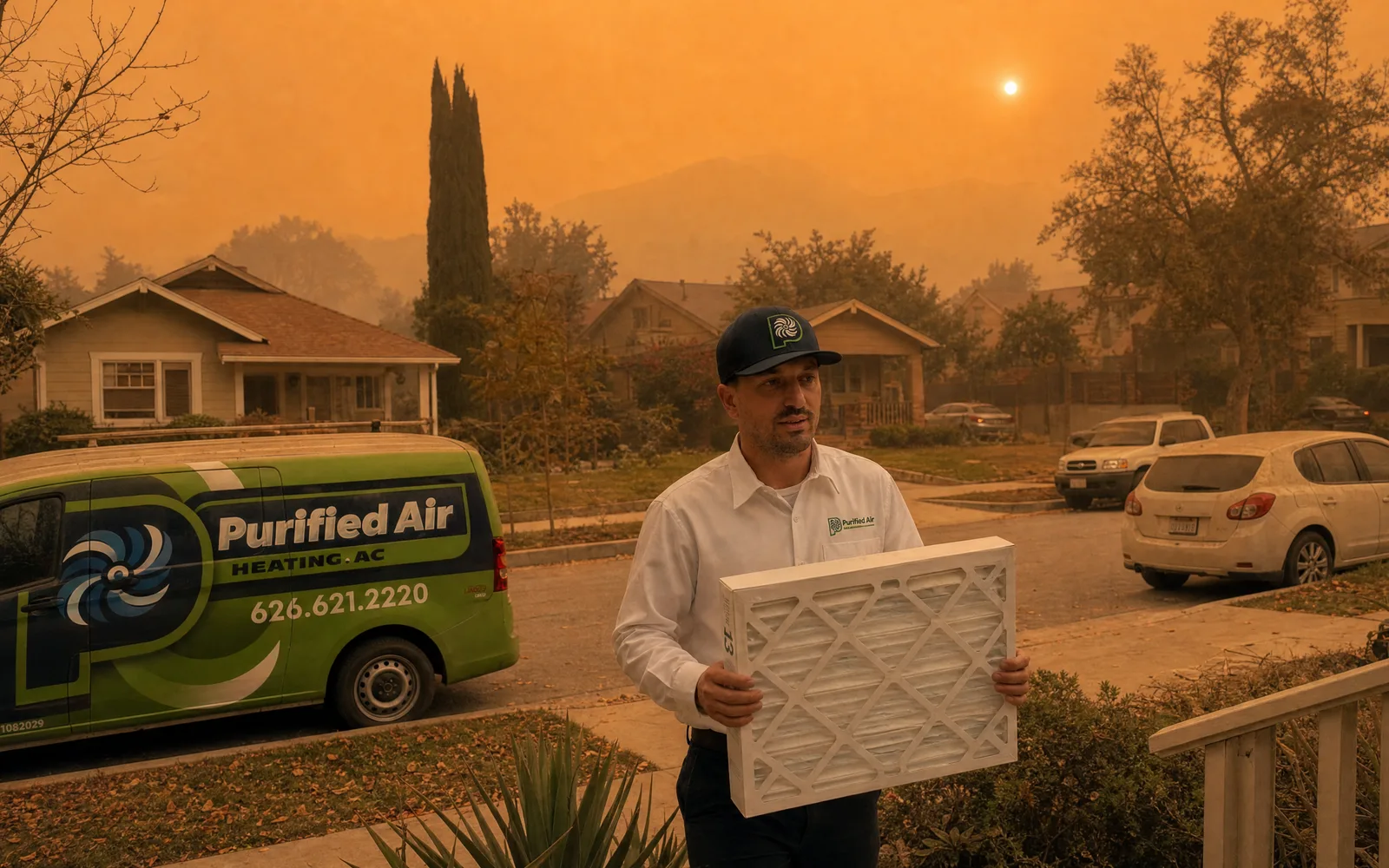
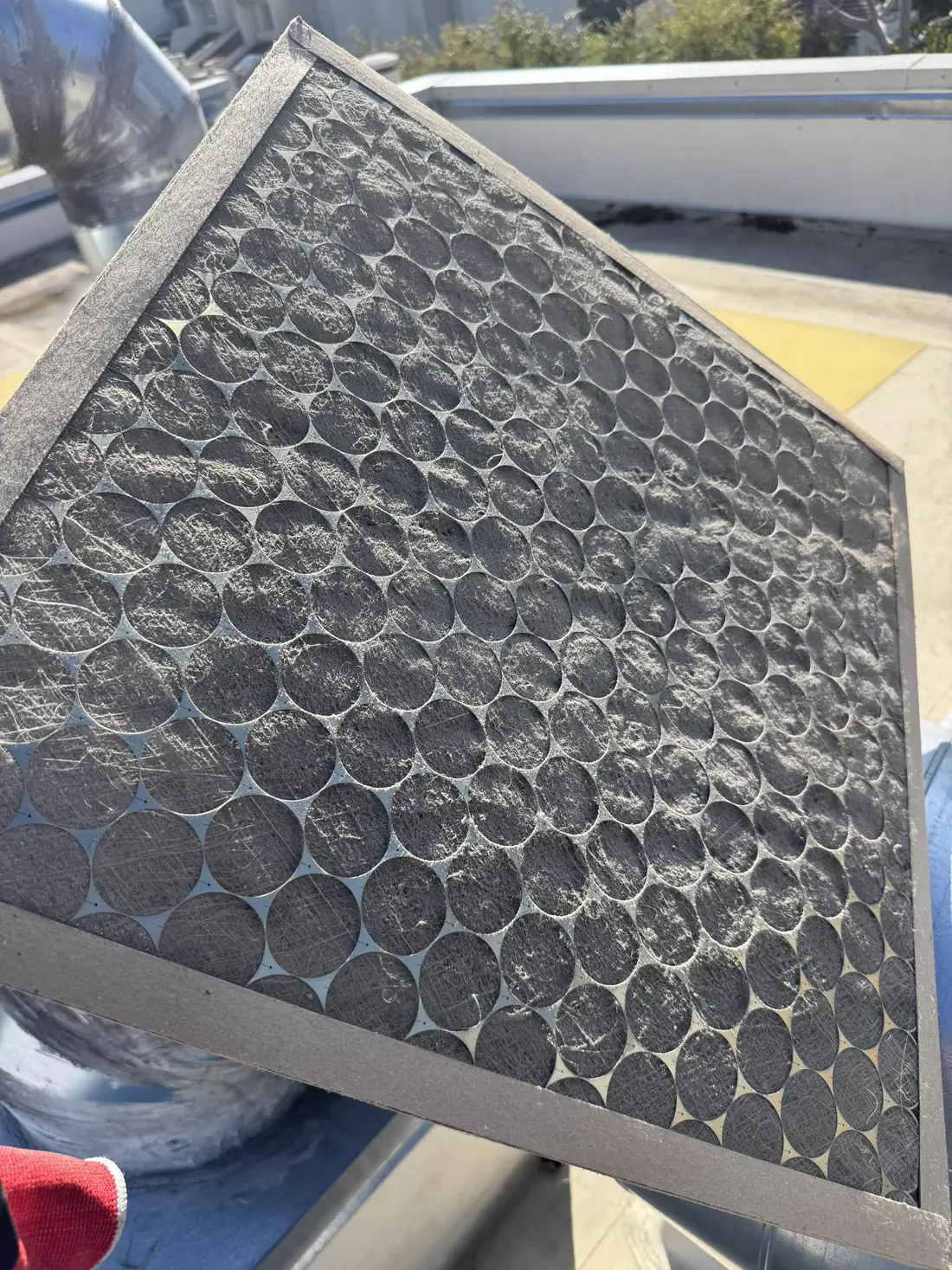
Then pull your air filter and hold it up to a light. If light barely gets through, it has been in too long. The filters we pull from San Gabriel Valley homes load up faster than the packaging suggests, especially after a windy stretch or a smoke event, so it is worth knowing how often that filter should really be changed.
What a Home Air Quality Monitor Can and Cannot Tell You
A plug-in or portable monitor is the next step up. Here is what its numbers mean.
PM2.5 is fine particulate matter, particles small enough to travel deep into the lungs, the kind that smoke, road dust and cooking put into the air. VOCs are volatile organic compounds, the gases given off by paints, cleaners, adhesives and new furniture. CO2 is carbon dioxide, less a pollutant reading on a home monitor than a stand-in for how well a room is ventilated: it builds up when people breathe in a closed room and drops when fresh air moves through. Most units also show temperature and relative humidity.
EPA's guidance on volatile organic compounds notes that many VOCs run consistently higher indoors than outdoors, up to ten times higher, and is candid that not much is known about health effects at the levels usually found in homes. So a VOC reading is a reason to open a window and look for the source, not a reason to worry.
Treat any monitor reading as a trend to investigate, not a lab result.
Getting a useful reading
- Put it where you spend hours, usually a bedroom or the main living area.
- Leave it in one spot for several days to see a baseline.
- Then move it, and compare a bedroom against the living room or the room nearest the garage.
- Note what was happening in the house when a number moved, which is often worth more than the number.
If the particle reading climbs every time the neighborhood turns hazy, that is a filtration question rather than a monitor question, and it helps to understand how whole-home purification systems actually work before you spend anything.
The Two Tests a Monitor Does Not Replace
A home air quality monitor is not a carbon monoxide alarm, and it is not a radon test. Both are routine household items, in the same spirit as a smoke alarm.
Carbon monoxide
Carbon monoxide, or CO, is a gas you cannot see or smell. Indoors it comes from unvented gas or kerosene space heaters, leaking chimneys and furnaces, gas stoves, generators, and car exhaust from an attached garage. The EPA's page on carbon monoxide notes that effects worsen as concentration and exposure time rise: fatigue in healthy people and chest pain in people with heart disease at low levels, then headache, dizziness, confusion and nausea as levels climb.
The answer is an alarm rather than a test. The Consumer Product Safety Commission recommends CO alarms on each level of the home and outside each sleeping area. If one sounds, get everyone outside and call for help rather than hunting for the source. And never run a generator inside a home or garage, even with the doors and windows open.
Radon
Radon is a naturally occurring gas that comes up from the soil beneath a house, and it is the one pollutant the federal government recommends every home measure. A typical particle and VOC monitor does not detect radon at all, which is why it needs its own test. Short-term kits are simple to use and widely available, and the EPA's page on finding a radon test kit points homeowners to their state radon program and to the National Radon Program Services at Kansas State University.
Results come in picocuries per liter, written pCi/L, the standard unit for how much radon is in the air. The EPA's indoor air guide recommends fixing a home that tests at 4 pCi/L or higher, and notes that lower levels still carry some risk. At or above that line, the next step is a qualified radon professional.
Humidity Is the Easiest Number to Check
Relative humidity is how much moisture the air holds compared with the most it could hold at that temperature. A hygrometer is a humidity gauge, and most monitors include one. The EPA's indoor air guide recommends keeping it between 30 and 50 percent, a range that is comfortable for people and unfriendly to mold.
This is also where the mold question gets answered before you pay a lab. EPA's brief guide to mold and moisture says that where mold is visible, sampling is usually unnecessary, and since no federal limits exist for mold or mold spores, there is nothing to compare a result against anyway. That guide puts it below 60 percent, ideally 30 to 50, and says mold control is moisture control: vent bathrooms and kitchens outside, run the exhaust fans, fix the leak.
Through a dry San Gabriel Valley summer the whole-house number usually sits low, so the moisture problems we find here tend to be local: a bathroom fan venting into the attic, a laundry area, a slow leak under a sink. A hygrometer moved room to room finds them faster than a whole-house average.
Checking Outside Air Is Not the Same as Testing Inside Air
With fire season ahead, this distinction matters. The Air Quality Index, or AQI, is the EPA's scale for outdoor air: a six-category color scale on which 50 or below is good and anything above 300 is hazardous, laid out on the AQI basics page at AirNow. It describes the air over the neighborhood, not the air in your hallway.
It still matters indoors: it explains why the house feels stuffy or smells faintly of smoke on a given day, and whether opening the windows will help or hurt. During smoke events, AirNow's Fire and Smoke Map layers official monitors with crowdsourced neighborhood sensors, and the South Coast AQMD app is the other local check.
When South Coast AQMD issues a particle pollution advisory, the City of Pasadena's public health department has advised residents in its smoke advisories to keep doors and windows closed, run an air purifier if they have one, and avoid running a whole-house fan or a swamp cooler (an evaporative cooler), since either can bring polluted air indoors. Plenty of older houses in the valley still have one or the other.
The indoor test is simple: if a monitor's particle number rises and falls with the outdoor AQI, outside air is getting in. From there, we have already written about what actually helps once smoke is in the house.
For households in Arcadia and the rest of the valley floor, where the basin holds smog and fine particles on still days, that question comes around every fall. Knowing now whether your house lets outside air in beats discovering it in October.
Why Two Houses on the Same Block Test Differently
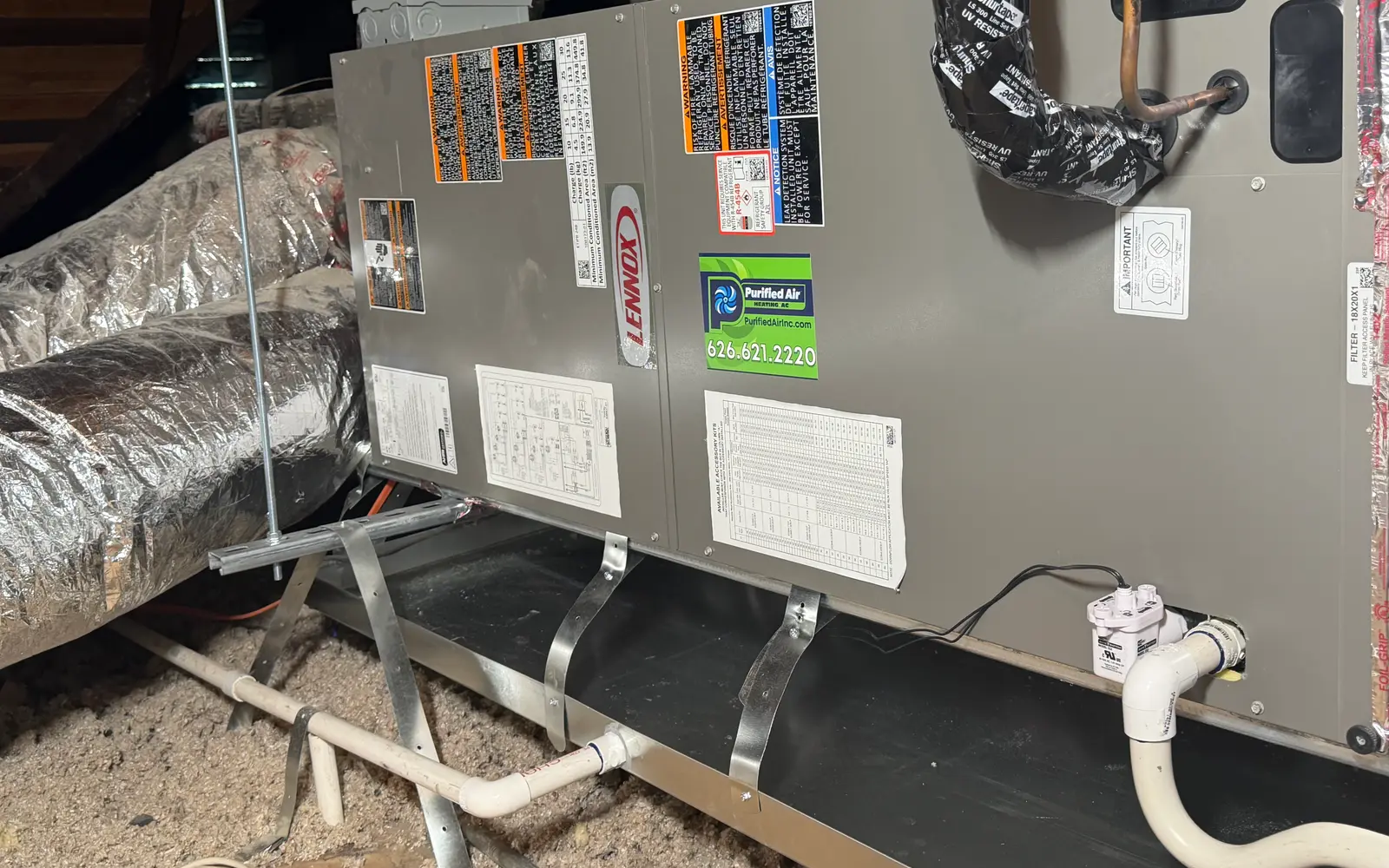
Here is what a national guide cannot tell you: the house itself is part of the test.
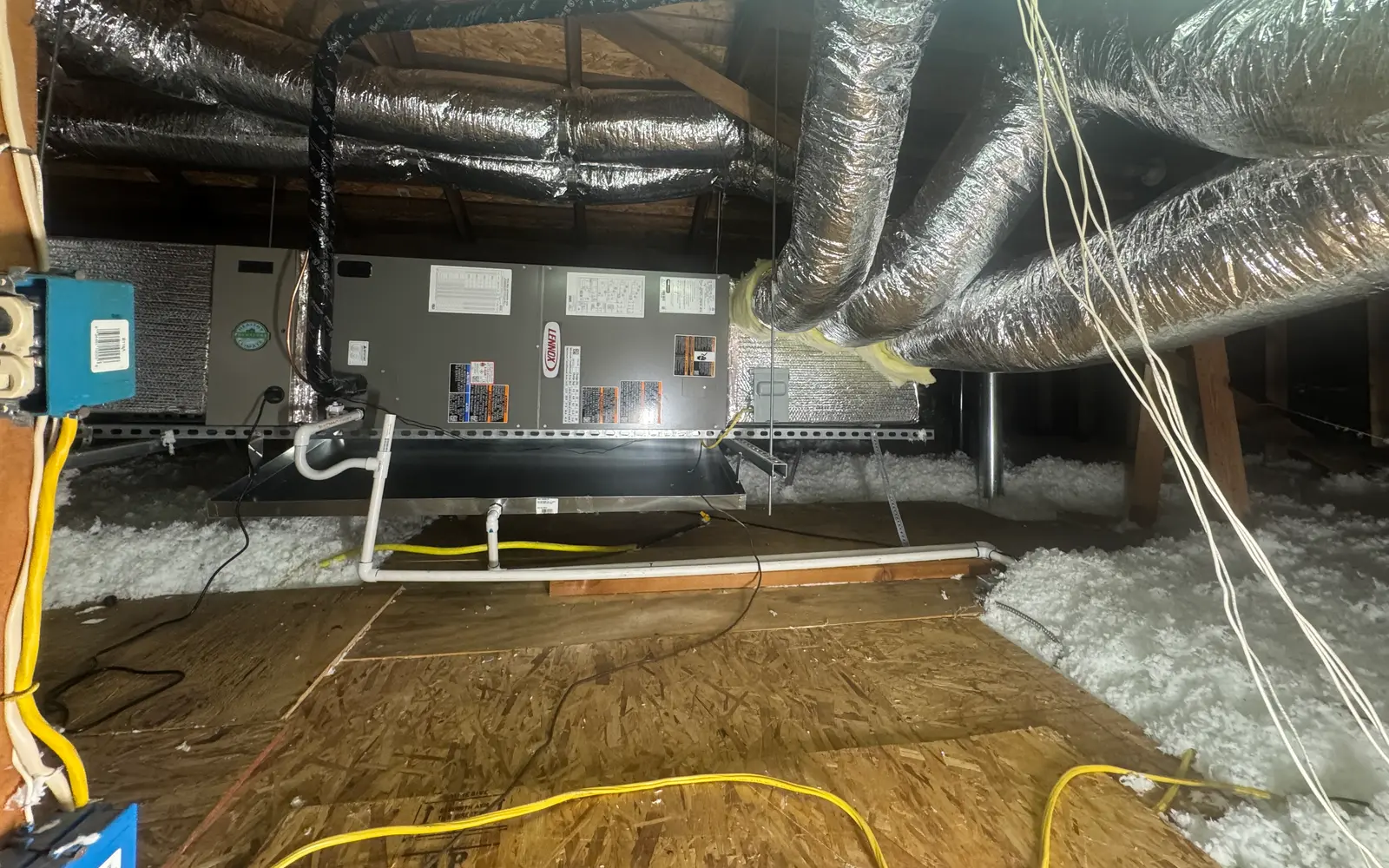
Most of the difference starts on the return side: the grille that pulls air from the rooms back to the equipment. If the ducts on that side leak at the joints, the system draws in whatever surrounds them: hot attic air, crawlspace air, insulation fibers. Gaps around recessed lights do the same thing more slowly.
We see this constantly in older homes with original ductwork, where the attic and the living room are effectively sharing air. The 1920s Craftsman and Spanish bungalows around Pasadena and Altadena were never built for central air, and the ducts added decades later often run unsealed. Newer builds have their own version: the mid-century ranch homes we see in San Marino often have long duct runs and original returns that have gone decades without an inspection. An Arcadia ranch with an attached garage adds one more path in.
So if a monitor reads worse in one room, or dust returns within days of cleaning, the ducts are a likelier explanation than the outdoor air. We have written more about the way ductwork moves dust, odors and allergens around a house.
When It Makes Sense to Have Someone Come Look
A professional visit makes sense when the steps above leave a question open:
- Symptoms that keep returning and clear up when you are away from the house
- A monitor reading you cannot connect to anything happening in the house
- Recent water damage, or a slow leak you cannot trace
- A renovation that brought in new paint, adhesives or pressed-wood cabinets
- A heavy smoke event with a system you are not sure is sealed or filtering properly
- Anyone in the home with asthma or another respiratory condition
What a professional indoor air quality assessment adds is a person who physically inspects the system, the filtration, the ductwork and the ventilation, then explains it in plain terms. That is how we approach it: we assess your home, explain what we find, and give you a clear recommendation with upfront pricing before any work begins.
For plenty of homes the honest answer after a look is a better filter, a sealed duct joint or a bathroom fan that actually vents outside, not new equipment.
What to Do With What You Find
Once you know what you are dealing with, the EPA's indoor air guide gives the order: control the source first, then improve ventilation, then add filtration or air cleaning as a supplement. A purifier will not solve a moisture problem and a fan will not fix a leaking duct, which is exactly why testing is worth doing.
One caveat as you shop: EPA's guide to air cleaners in the home makes the point that most filters handle either particles or gases, not both, and that no air cleaner or filter removes everything. If your readings point at both, the fix is usually two things rather than one.
Purified Air is a family-owned, Lennox Certified team based in Pasadena and serving the San Gabriel Valley, Burbank and Glendale, and clean indoor air is the work our name comes from. If the steps above left you with a question about what is in your air, call us at 626-621-2220. We are glad to take a look.