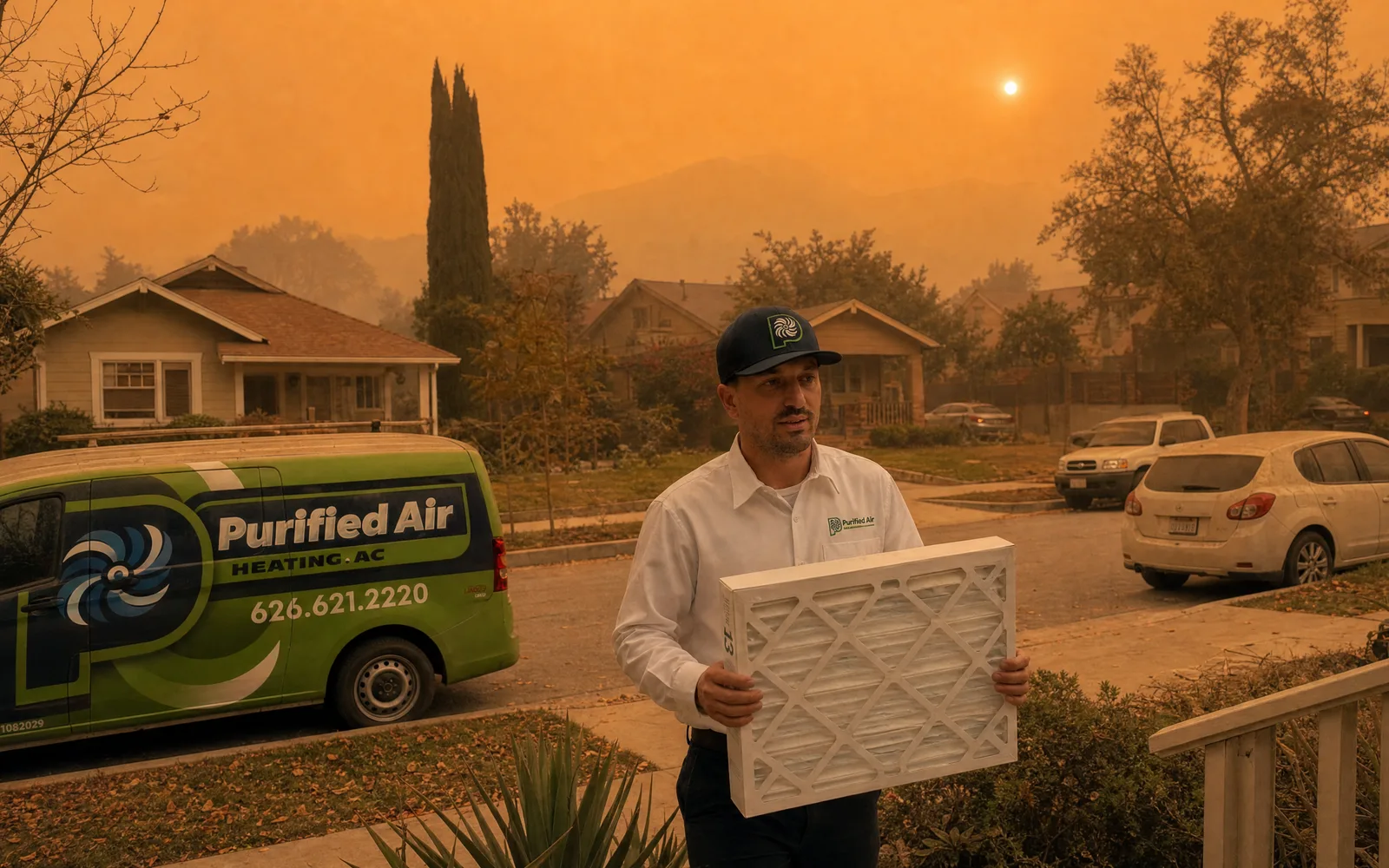
It is the first of October. The air over the San Gabriel Mountains is clear this morning, the afternoons are still warm, and the first Santa Ana winds of the season are somewhere out in the forecast. This is the quiet stretch of fall in the foothills, and the easiest time of year to prepare your home for wildfire smoke.
We know the word wildfire lands differently around here now. The Eaton Fire began on January 7, 2025, in and around Altadena and parts of Pasadena, and many of us carry that memory. This post is about something much smaller and more ordinary: getting a house ready for smoky air on a calm day, when nobody is in a hurry.
We have already written about what actually helps once smoke is in the house. This is the companion piece: everything you can do, buy or book in advance, so the during-event list stays short.
What Preparing for Smoke Season Actually Means
Wildfire smoke is mostly a fine-particle problem. PM2.5 is the shorthand for those particles, small enough to slip deep into the lungs and to drift indoors through gaps in the building and through the heating and cooling system itself. To prepare your home for wildfire smoke, you need to know four things: what filter your system can safely take, whether it pulls in outdoor air, whether the ducts leak, and where the household will spend a bad-air day. Then add alerts, a few supplies and a written plan.
The EPA notes that smoke events can occur without warning, which is why the useful work happens before one. Most wildfire preparedness checklists cover the outside of the house. This one is only about the air inside it.
The Wildfire Smoke Readiness Checklist
Thirteen items in three groups, each a short action plus the reason it matters. For the fridge door, download the printable one-page wildfire season readiness checklist and work through it over a weekend or two.
Know Your System
- Write down your filter size and photograph your equipment's model label. The size is printed on the filter's edge, and a technician needs the model number to say what your blower can handle.
- Ask an HVAC professional the highest MERV rating your system can take. MERV is a filter efficiency score; 13 is the usual smoke target, but a thin slot or small blower may allow less, and only a check of the system tells you.
- Buy spare filters now, for your system and for any portable air cleaner you own. Smoky air loads filters faster, and buying early means you are not shopping when everyone else is.
- Find out whether your system pulls in outdoor air, and where that control is. Some systems have a fresh-air intake that can be closed; many older homes have none, and either way it is better to know now.
- Locate the fan "On" setting on your thermostat. Running the fan continuously pulls the whole house's air through the filter, so know where the switch is before you need it.
Service, Seal and Inspect
- Book a pre-season HVAC check. A technician can check airflow, the blower and filter fit on a calm day, and make sure the cooling side is ready for warm afternoons with the windows shut.
- Have your ducts checked for leaks, especially runs through the attic or crawlspace. A typical home loses 20 to 30 percent of its duct air to leaks, and the fix is mastic or metal tape, never duct tape.
- Check that your filter sits snug in its slot with no gaps around the edges. Air takes the easy path around a loose filter instead of through it; never bend or crush a filter to fit.
Air Cleaners, Alerts and Supplies
- Pick your cleaner-air room now and measure it. Choose a room with few windows and doors and no fireplace, such as a bedroom with an attached bathroom, and multiply length by width to get square feet.
- Buy a HEPA portable air cleaner with a smoke CADR of at least two-thirds of that room's square footage. HEPA is the filter grade for fine particles and CADR the rated volume of cleaned air per minute, so a 120 square foot room needs 80 or more; pick a model certified by the California Air Resources Board and skip anything that makes ozone.
- Download the South Coast AQMD app, sign up at AirAlerts.org and bookmark the AirNow Fire and Smoke Map. Alerts only help if they are set up in advance, and the app can notify you at an air quality level you choose.
- Stock NIOSH-approved N95 respirators, several days of food and medication, and supplies for pets. Choose foods that need little or no cooking so nobody has to shop, or run the stove, on a smoky day.
- Write a one-page bad-air-day plan and look up your nearest Clean Air Center on the California Air Resources Board's map. Decide who sets up the cleaner-air room, who swaps the filter and how you will stay cool with the windows shut, and ask a doctor what belongs in the plan if anyone in the house has asthma or a heart or lung condition.
Can Your System Take a Higher MERV Filter?
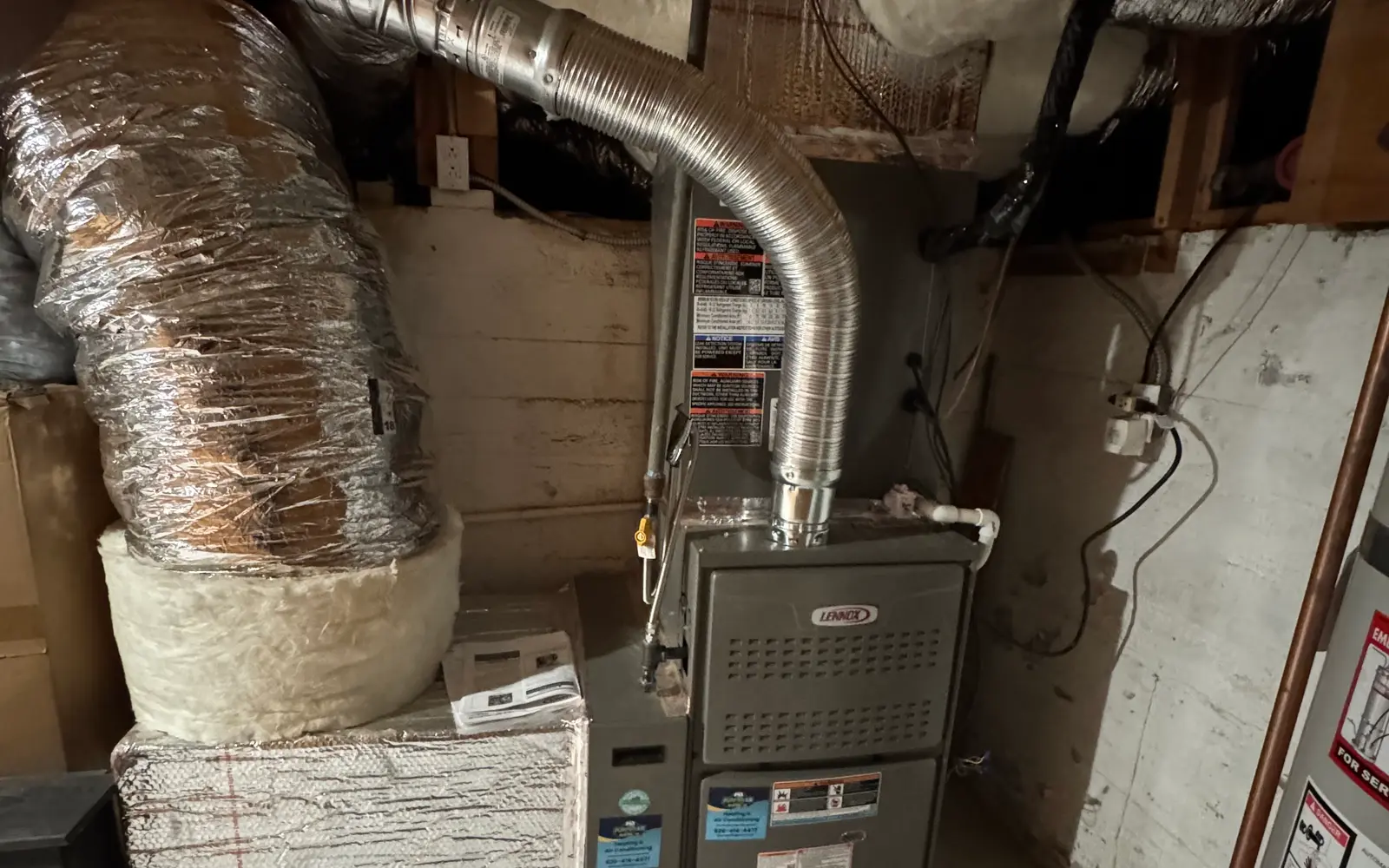
MERV, the Minimum Efficiency Reporting Value, is a 1 to 16 scale of how well a filter catches particles. The EPA's wildfire guidance for homes recommends MERV 13, or as high a rating as your system's fan and filter slot can accommodate, and says a technician may be needed to find that ceiling. Our buyer's guide covers how the MERV scale works and the filter cabinet options.
In the 1920s Craftsman and Spanish bungalows across Pasadena's older neighborhoods, the filter often sits in a one-inch slot at the return grille, the vent that pulls room air back to the equipment. That thin slot matters, because a denser filter is harder to pull air through, and every blower has a limit on the resistance it can work against. That resistance is called static pressure, and a technician measures it with a gauge, filter in place, to see whether the system is inside its range or straining.
If a one-inch slot is the limit, the usual fix is a media cabinet at the return holding a thick filter with far more surface to breathe through, the most common piece of the air filtration and purification equipment we install. In smoky air, plan on changing filters more often than the 60 to 90 days manufacturers typically suggest, which is why spares are on the list.
Does Your System Pull in Outdoor Air?
Some central systems have a fresh-air intake, a duct that deliberately brings outdoor air into the return side of the system. On a smoke day it is a straw, which is why the during-event advice is to close it and run in recirculate mode, so the blower only moves and filters the air already inside.
The pre-season job is to find out. The EPA puts it plainly: learn whether your system has a fresh-air intake and, if so, how to close it or switch to recirculate. In our experience many older foothill homes have no dedicated intake at all, which is worth knowing too.
While you are at it, find the fan setting on the thermostat: Auto runs the blower only while heating or cooling, On runs it continuously, and the EPA reports that a high-efficiency filter with the fan on continuously may cut indoor PM2.5 by about half. Homes with ductless mini-splits or no ducts can skip the intake and duct items; there, a portable cleaner and a cleaner-air room do the work.
Older Foothill Homes and Leaky Ducts
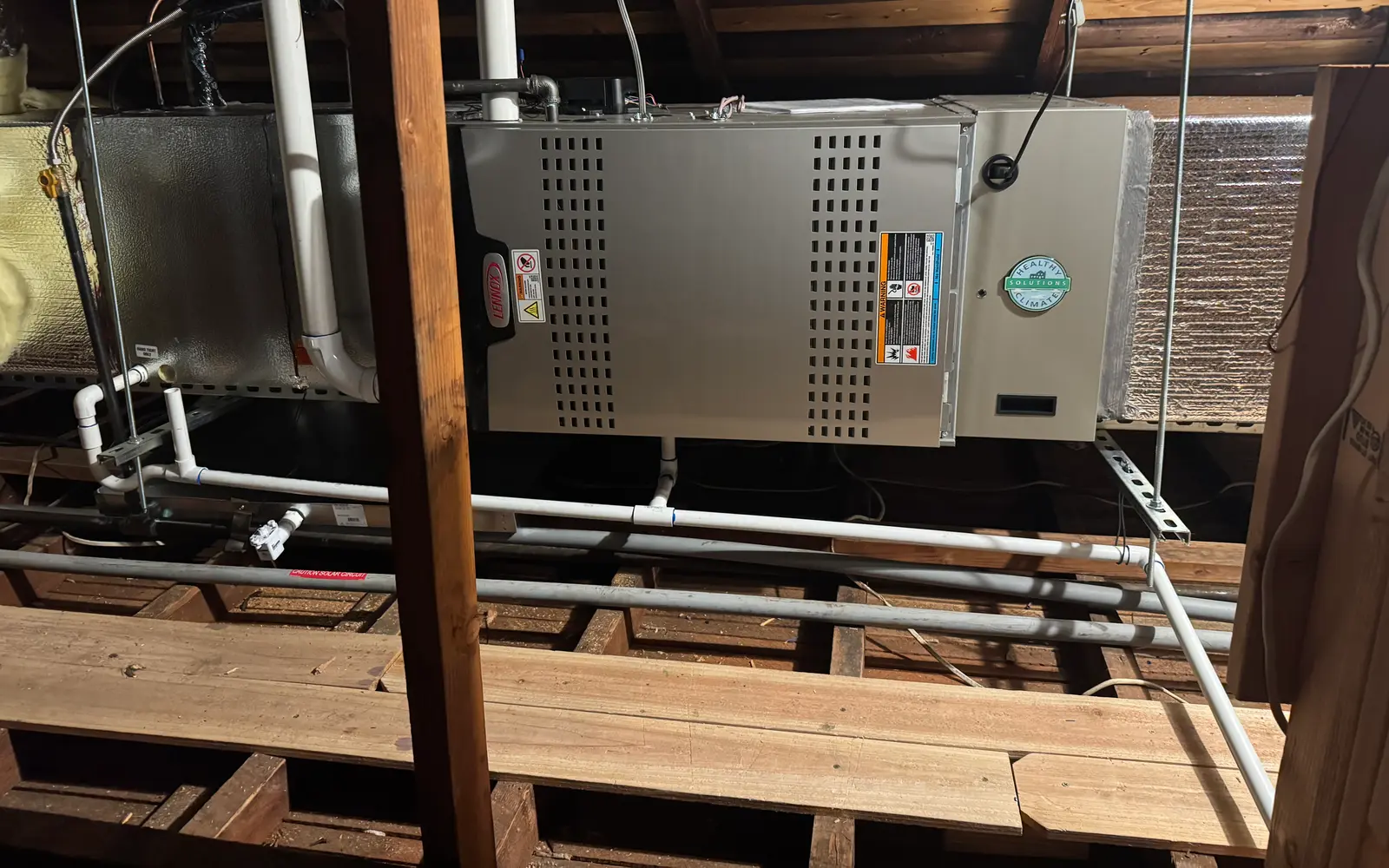
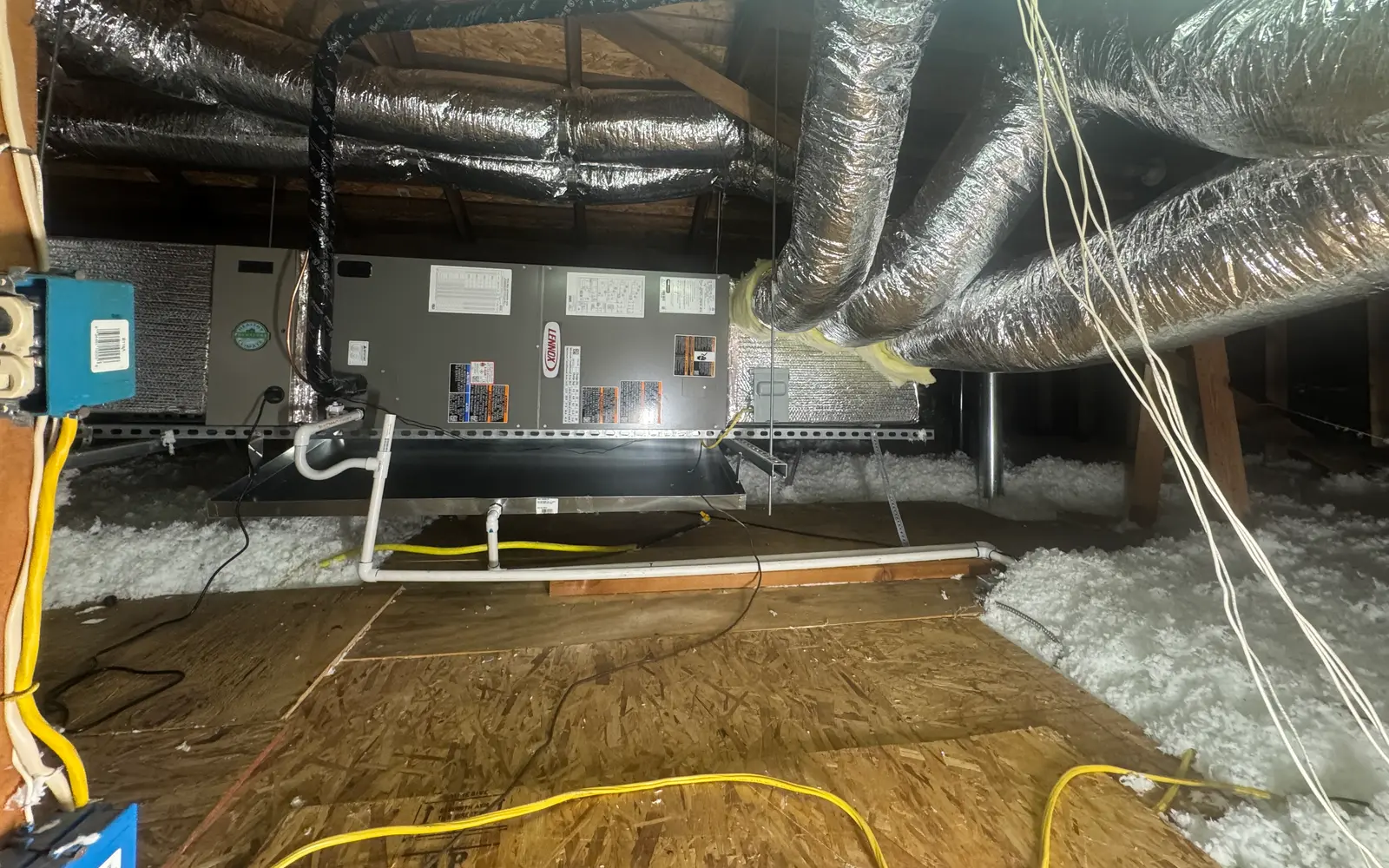
A filter can only clean the air that passes through it. If the return-side ducts leak at their joints, the blower draws in whatever surrounds them: attic or crawlspace air, dust, insulation fibers. We see it constantly in the older Altadena houses we visit, where central air was retrofitted into a Craftsman decades later and the runs were never sealed, and in the mid-century ranches of Monrovia, Arcadia and San Marino, with long runs and original returns.
ENERGY STAR's duct sealing guidance puts the loss in a typical home at about 20 to 30 percent of the air moving through the ducts, and the fix is mastic sealant or metal tape, never duct tape. Gaps at the air handler or filter door are worth a look with a flashlight; runs through the attic or crawlspace are the duct repair and sealing work we would rather do in a cool October attic than in the middle of a smoke stretch. Sealing ducts is the smoke-season job; cleaning them is a different service for a different problem.
Choosing a Cleaner-Air Room and Sizing a Portable Cleaner
A closed house is not a sealed one. The EPA puts indoor PM2.5 during a smoke event at roughly 55 to 60 percent of the outdoor level with doors and windows shut, ranging from 30 to 100 percent house to house, which is the argument for one room you can make genuinely clean. In the foothill homes we visit in La Canada Flintridge, Sierra Madre and Altadena, that is usually the bedroom.
The EPA's guide to creating a cleaner air room suggests one big enough for everyone to be comfortable, with few windows and doors and no fireplace. Portable units are rated by CADR, the Clean Air Delivery Rate, the volume of cleaned air delivered per minute at top speed, and the EPA's rule for smoke is a CADR of at least two-thirds of the room's square footage: a 10 by 12 foot bedroom needs 80 or more.
Look for a true HEPA filter, short for High-Efficiency Particulate Air, the dense filter grade built for fine particles, and check that the model is certified by the California Air Resources Board and does not intentionally produce ozone; certification is an ozone check, not a performance rating. A plug-in PM2.5 monitor is a modest purchase too, and we wrote up how to read one and where to put it this summer.
Alerts, Supplies and a Plan for a Bad-Air Day
Air quality is reported on the AQI, the Air Quality Index, the EPA's scale on which 0 to 50 is good, 101 to 150 is unhealthy for sensitive groups and 301 and above is hazardous. South Coast AQMD's wildfire smoke guidance, from our regional air district, asks residents to download its app and sign up at AirAlerts.org before an event, and the app can notify you when the AQI reaches a level you choose.
The EPA suggests NIOSH-approved N95 respirators and at least a five-day supply of food and medication, favoring foods that need little cooking. The CDC notes that wildfire smoke irritates the eyes, nose, throat and lungs and can make it hard to breathe, and that children and people with asthma, COPD, heart disease, diabetes or chronic kidney disease are at higher risk. If that describes anyone in your house, AQMD suggests talking with their doctor about a plan now.
Then write the plan down, one page, and keep it with the checklist: who shuts the room and runs the cleaner, who swaps the filter, how the house stays cool with the windows shut on a warm Santa Ana afternoon, where the pets go, and where the nearest Clean Air Center is, using the California Air Resources Board's map of spaces that provide filtered air during smoke events.
Book It While the Air Is Clear
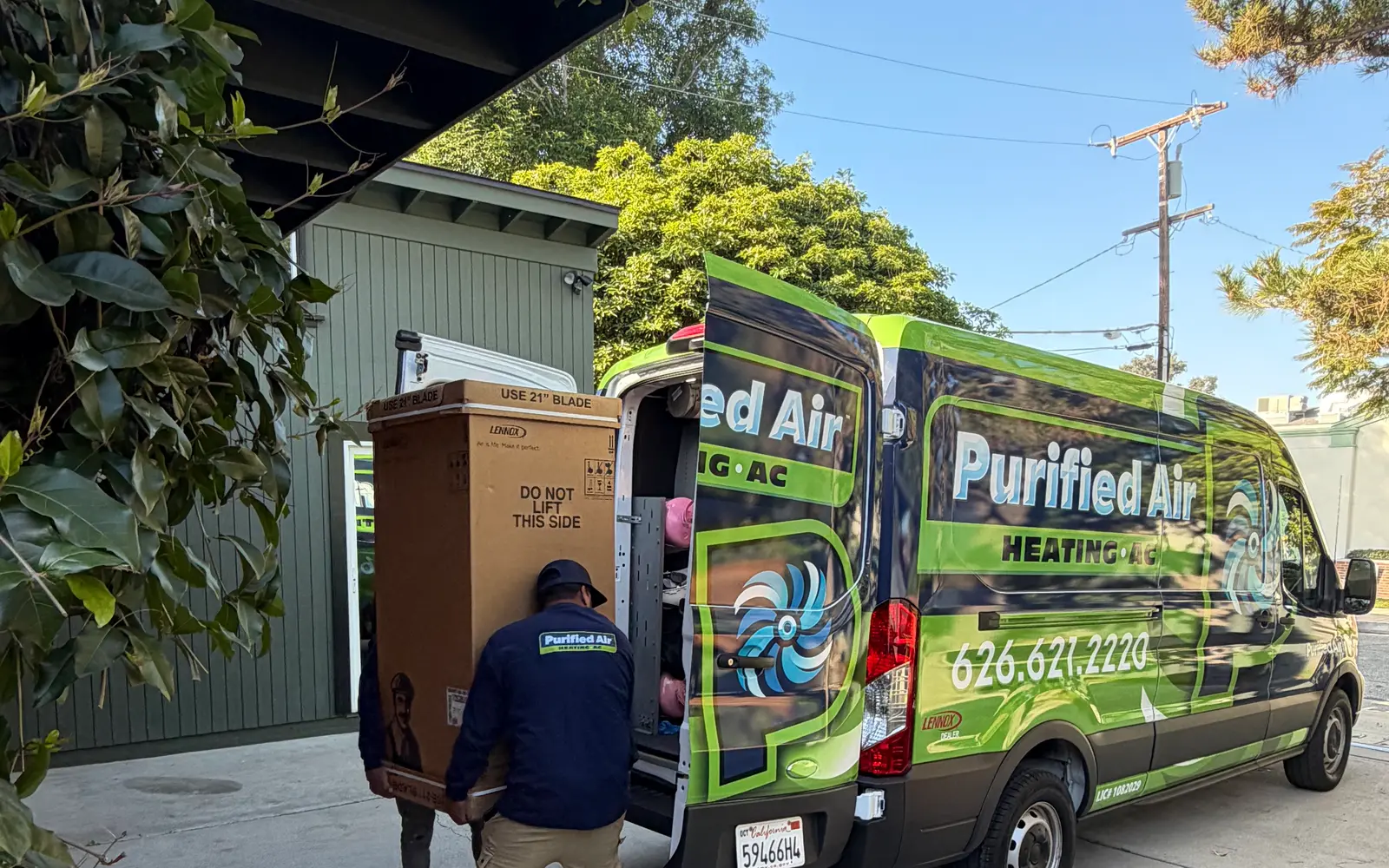
The items that need a second set of eyes are the ones about the system itself: what MERV your blower can take, whether there is an intake, how the filter sits and whether the return-side joints are tight. We are glad to take a look before the season and tell you plainly what we find; indoor air quality work is where the name on the van comes from.
Purified Air is a family-owned, Lennox Certified team based in Pasadena and serving Altadena, La Canada Flintridge, Sierra Madre, Monrovia, Arcadia, San Marino, South Pasadena and the wider San Gabriel Valley. Clean, healthy indoor air is what we do. For a hand with the system items on the list, call us at 626-621-2220. Then go enjoy the clear air.