By late August in the foothills, the windows have been shut for weeks, the afternoons are still hot, and there is a film of dust on the bookshelf no matter how often you wipe it. Fall wildfire season is ahead, not behind. Somewhere in there a technician mentioned a whole-home air purification system at a tune-up, or a neighbor brought one up, and you went looking. What you found was a wall of product pages that all sound the same.
This guide is the conversation we would have at your kitchen table: what these systems really are, which kind solves which problem, whether your house can take one, and what to ask before anyone quotes you. For the short list during an active smoke stretch, we covered what actually helps during a smoke event separately.
What a whole-home air purification system actually is
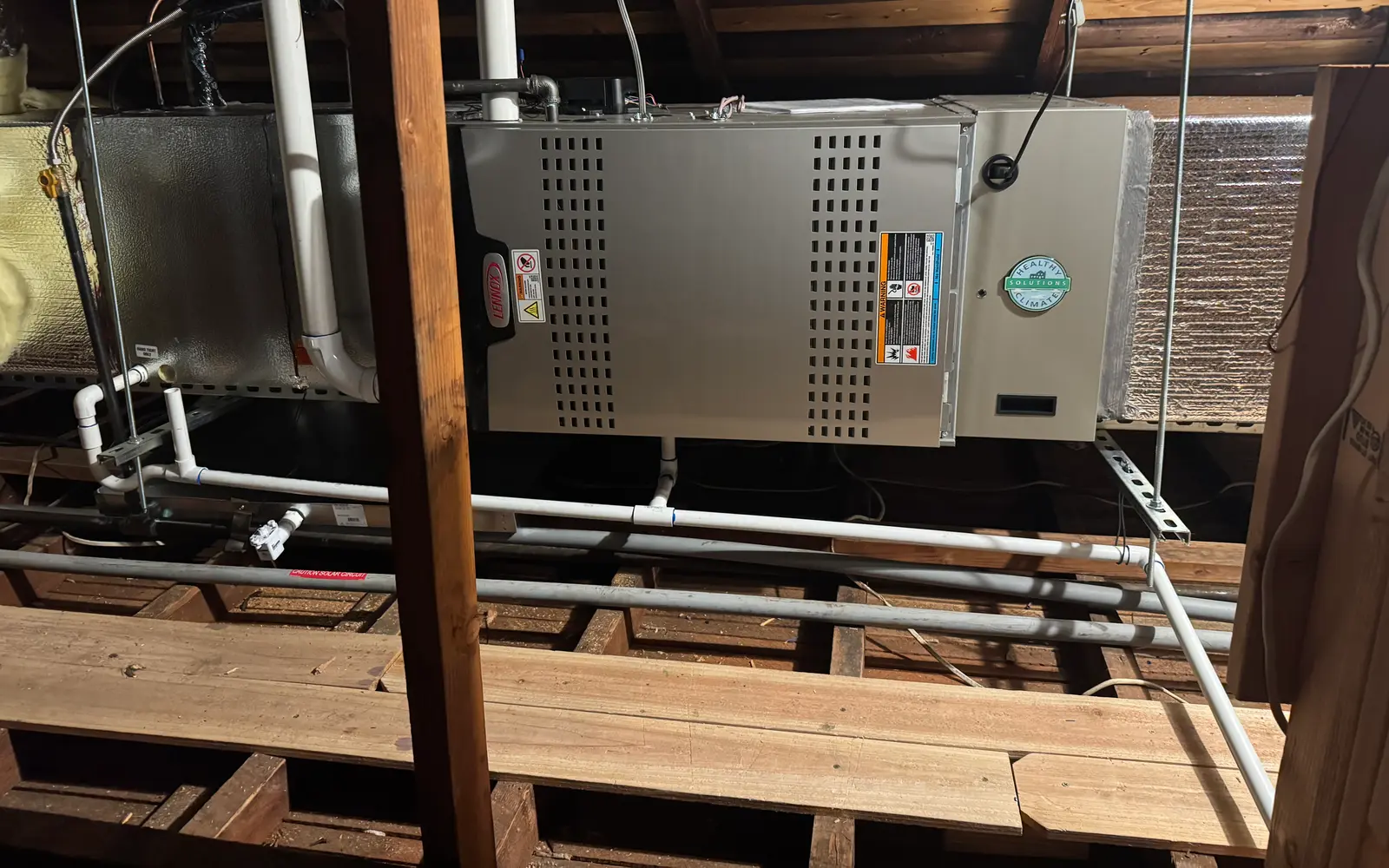
A whole-home air purification system is not one product. It is any equipment that lives inside your central heating and cooling system, usually at or near the return (the side that pulls air from the rooms back to the air handler), and treats the air as it circulates through the whole house. A portable air purifier cleans one room. A whole-home system works on the air every room shares.
The two are complements, not rivals. Plenty of homes we visit run both, and sorting out that combination is a big part of the indoor air quality side of what we do.
Here is the catch most buying guides skip. Anything in your ductwork only cleans air while the blower is running, and the EPA puts that at less than a quarter of the time in most homes across a heating or cooling season. So the fan setting matters as much as the equipment: On rather than Auto keeps air moving through the filter between calls for heat or cool.
Start with the filter you already have
Before anyone sells you equipment, be honest about the filter already sitting in your return. For a lot of households, a better filter is the first upgrade, and sometimes the only one they need.
Filters are rated on the MERV scale, short for Minimum Efficiency Reporting Value, which runs from 1 to 16. Higher numbers catch smaller particles: larger dust and pollen at the bottom, mold spores and pet dander in the middle, smoke particles and the particles that carry bacteria and viruses at the top. The EPA's guidance on home air cleaners points to a filter rated at least MERV 13, or as high as your system will accommodate. MERV 13 has to demonstrate at least 50 percent removal of the smallest particles tested.
A denser filter is harder to pull air through, and every blower and duct system has a ceiling on how much resistance it can take. Push past it and airflow drops, and in some cases the coil freezes or the furnace overheats. "Buy the highest MERV you can find" is not good advice. Matching the filter to what your equipment can actually move is.
That ceiling is lower than owners expect in the older Pasadena homes we work in. A 1920s Craftsman or a Spanish bungalow was never built for central air, and the ductwork retrofitted decades later was sized for the equipment of its day. Whether that system can take MERV 13 gets checked at the house, not read off a product page.
The four kinds of whole-home systems, and what each one solves
If a better filter is not enough, or your system cannot take one, this is where the air purification and filtration systems we install come in. Each category solves a different problem.
Media and high-MERV filter cabinets
The most common whole-home upgrade is the least glamorous: a deeper cabinet at the return holding a thick pleated media filter. The deep pleats give the air more surface to pass through, so it catches smaller particles without the airflow penalty of a dense thin filter. This is the answer for dust, pollen, pet dander and smoke particles.
One honest note, since you will see "whole-house HEPA" everywhere. HEPA, short for High-Efficiency Particulate Air, is the gold standard in portable room units, and true HEPA media is dense. Most central blowers were not built to pull air through it without a dedicated cabinet and a stronger fan, which is why whole-house air purifiers are usually high-MERV media or electronic, and why a portable HEPA unit still earns its place in the bedroom.
Electronic and ionic air cleaners
Instead of straining particles out, these give them an electric charge so they collect on a plate or clump together and settle out of the air. Ionizers and electrostatic precipitators both belong here. It is a legitimate category with a performance caveat and a California rule attached, both covered below.
UV-C lamps in the duct or at the air handler
UV-C is germicidal ultraviolet light, aimed at microorganisms passing through the duct and at coil surfaces where mold settles. It does nothing for particles, so it supplements filtration rather than replacing it, and where a system already filters well it adds less than the marketing suggests. The light is not meant for eyes or skin either, which is why we install lamps with service access in mind: a technician's concern inside a duct, not a living-room one.
Activated carbon
Rather than trapping particles, activated carbon works on odors: the smell of smoke and chemical pollutants, not the dust they ride in on. That is why it is the second stage in portable units, and why smoke guidance pairs HEPA with a carbon filter. If the complaint in your house is a smell rather than a sneeze, carbon is the piece to ask about.
Will your house even take one?
National buying guides never ask this, because they assume everyone has central ducted air. Around here that is not a safe assumption. An in-duct system, whatever the technology, needs central ductwork and a spot where a cabinet fits. Homes in this part of the San Gabriel Valley fall into three situations.
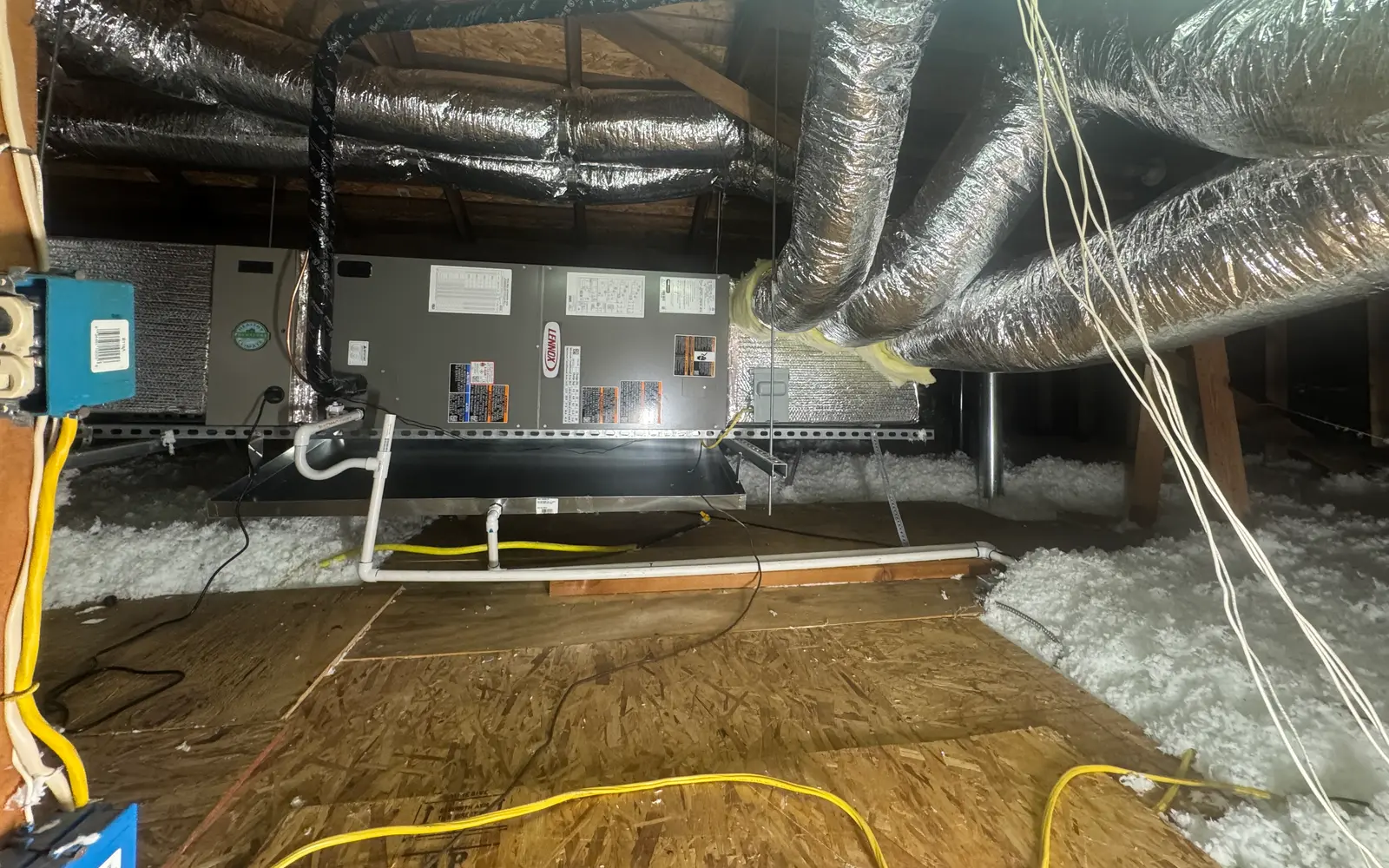
The first is original or well-planned central forced air, where the install is straightforward. The second is retrofitted or partial ductwork, added long after the house was built. That is workable, but the job has to be planned around what is there: where a cabinet fits in a tight attic or closet, and what the existing runs can move. We see it in many of the Altadena homes we visit, and in the older bungalows and additions around Sierra Madre and South Pasadena.
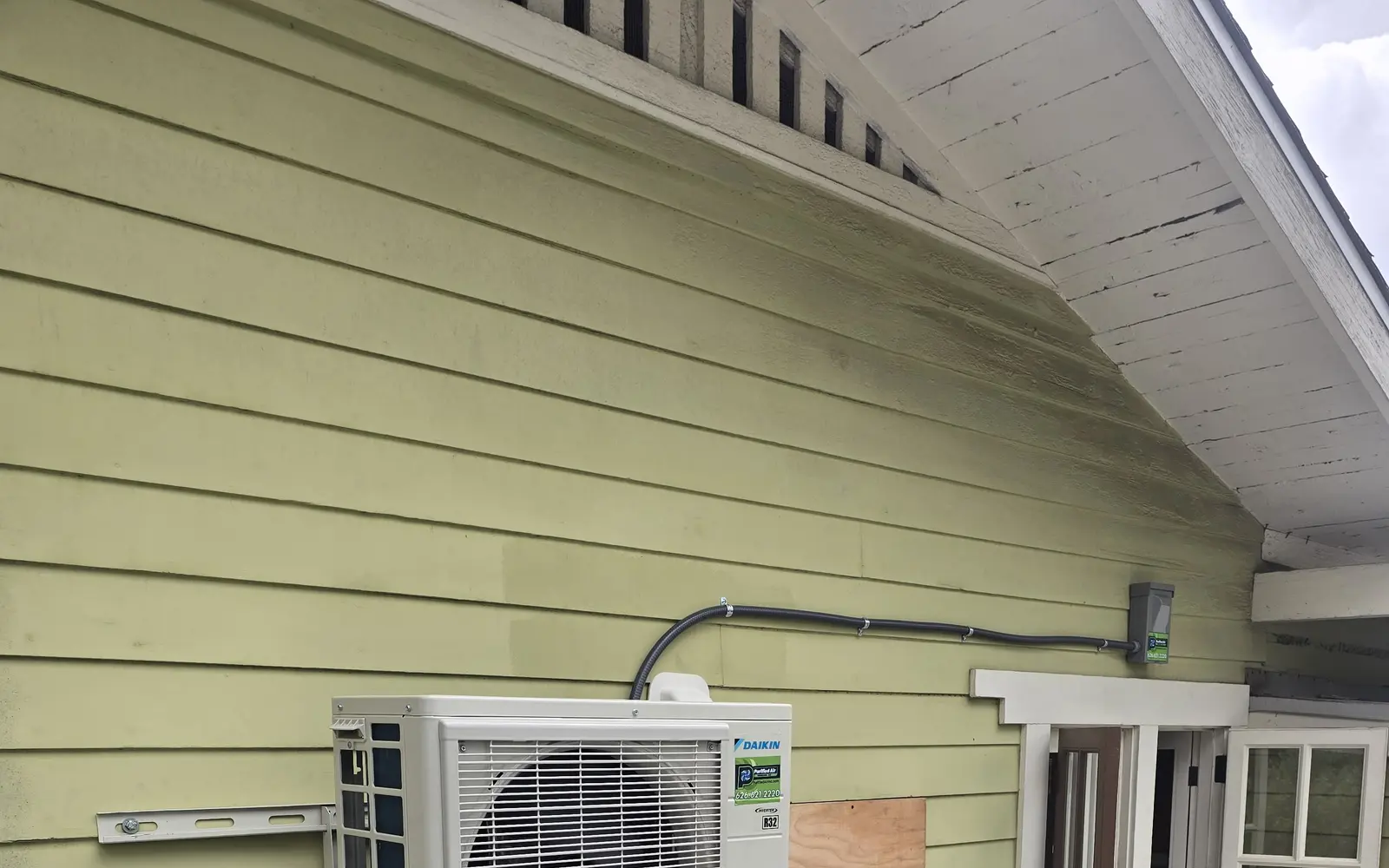
The third is a home with ductless mini-splits, or no ducted system at all. There, an in-duct whole-home system is not a fit, and we would rather say so than sell around it. The honest path is room-level filtration: a portable HEPA unit sized to each room people actually use, and keeping the mini-split's own filters clean.
Ozone generators, ionizers, and the California question
Two kinds of equipment get confused here.
The first is the ozone generator sold as an air cleaner, a device that works by producing ozone. The EPA's page on ozone generators is plain about it: no federal agency has approved these devices for use in occupied spaces, at concentrations within public health standards ozone has little potential to remove indoor contaminants, and ozone can cause chest pain, coughing, shortness of breath and throat irritation. That is the device to leave on the shelf.
The second is the ionizer or electronic air cleaner, where the honest points are about performance and paperwork, not danger. On performance, the same EPA page reports that in experiments, ionizers were less effective at removing dust, tobacco smoke, pollen or fungal spores than either high-efficiency filters or electrostatic precipitators.
On paperwork, California has a rule with teeth. Portable air cleaners sold here have needed certification from the California Air Resources Board, CARB, since 2010, and electronic in-duct devices came under the same rule in 2020, with the phase-in ending in 2022. A certified device has to stay at or under 0.050 parts per million of ozone, which is 50 parts per billion (a measure of how much of a gas is in the air). CARB publishes a list of CARB-certified air cleaning devices, split between mechanical devices that only filter and electronic devices tested under the limit, and it is clear that certification is an emissions check, not a rating of how well a device cleans air.
So the question to ask about any electronic device is not whether to avoid the whole family. It is whether it is CARB certified, and under which category. If the answer is not on the listing, keep looking.
Why late August is the moment to think about this
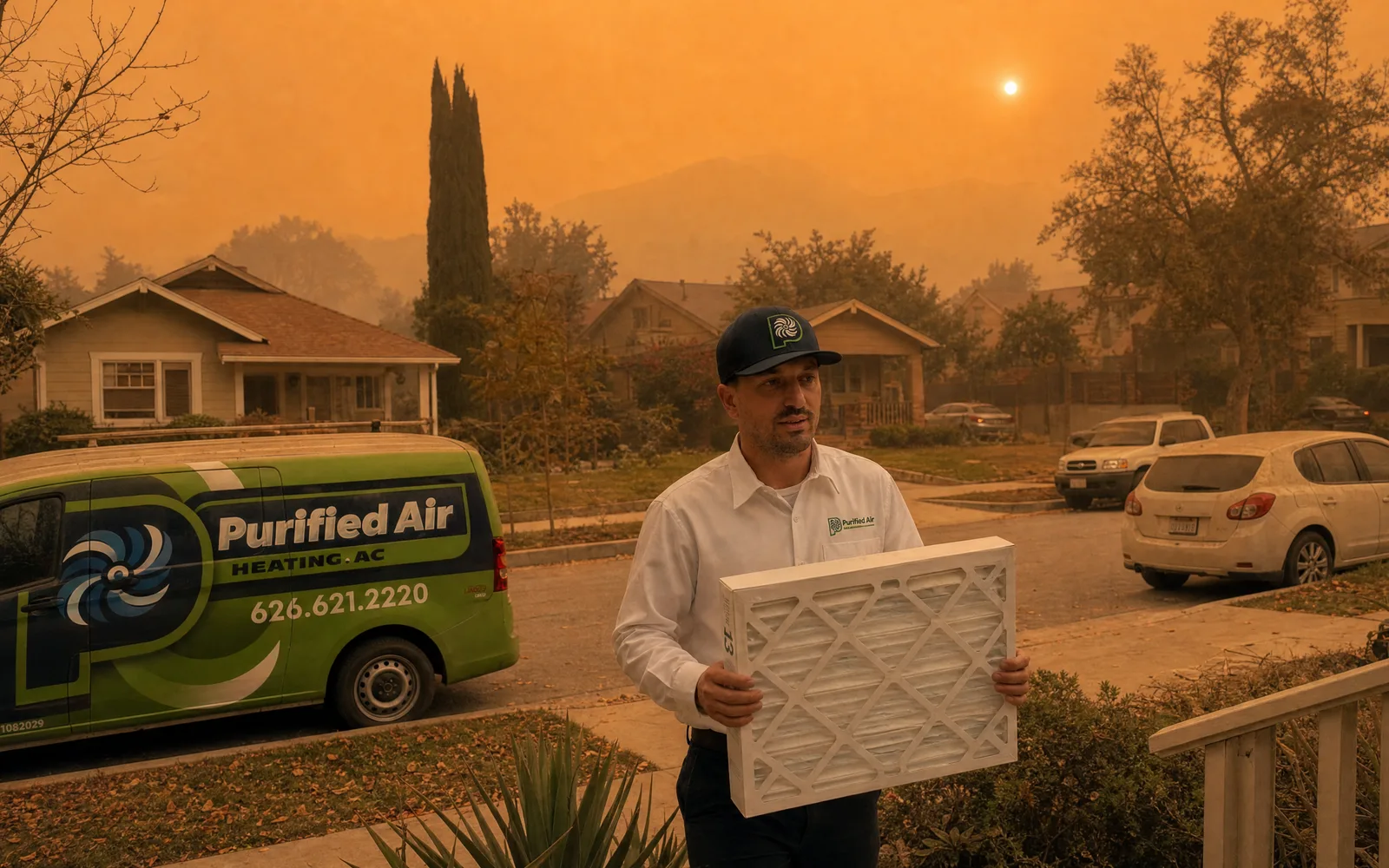
Fall wildfire season in Southern California runs roughly August through November. Late August is the planning window, not the reacting window, and equipment is easier to choose when nobody is in a hurry.
For households in La Canada Flintridge, Altadena and northwest Pasadena, this is not abstract. The Eaton Fire is well over a year behind us, and families near the burn area are still thinking hard about what is moving through their air.
The City of Pasadena's public health department keeps its Eaton Fire recovery guidance updated, and it points to MERV 11 or 12 filters with gaps in the filter holder sealed, monthly filter changes until the smoke smell is gone, and portable cleaners that pair HEPA with activated carbon. If MERV 11 or 12 sounds lower than the MERV 13 above, that is the airflow ceiling at work: the local guidance names a number most existing systems can actually pull air through.
During an actual smoke event the playbook is short: recirculate rather than pull in outside air, run MERV 13 or higher if your system can take it, and set the fan to On.
Spring pollen off the foothills, pet dander, cooking, and the dust that old duct runs shed are all there in February too. Wildfire season is the prompt, not the whole reason.
What owning one actually looks like
The equipment only keeps working if it is looked after.
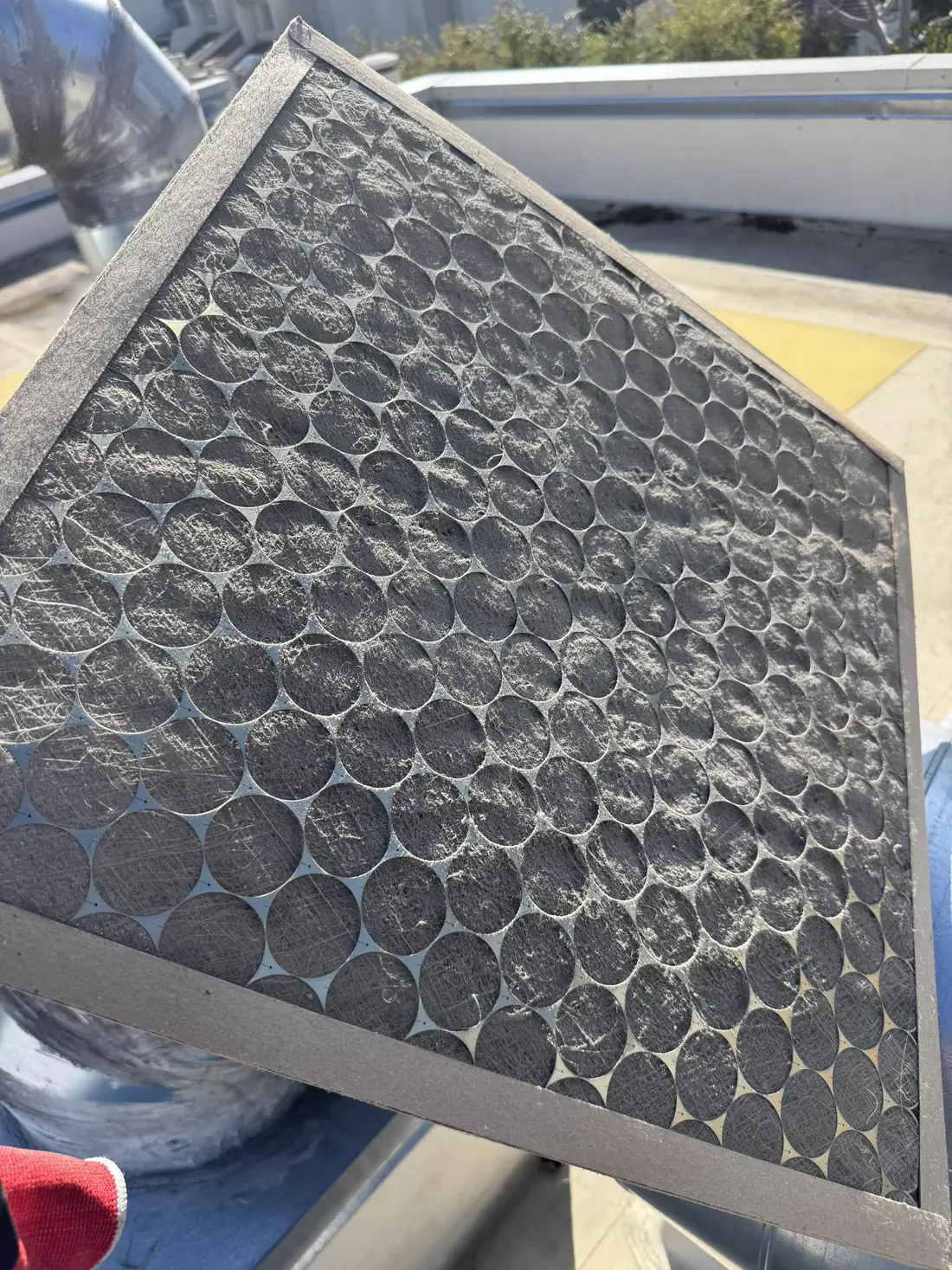
The EPA guidance above notes that manufacturers typically recommend replacement every 60 to 90 days, and that a filter coming out heavily soiled is telling you to change it more often. During a smoke stretch, monthly is the local guidance. A deeper media cabinet runs on its own schedule, but the photo above is what skipping it looks like.
UV bulbs have a service life too, and get replaced on the schedule the manufacturer sets. None of this is hard, but it has to live on someone's calendar.
One thing to expect from a good installer: once denser filtration is in, they check that the system still moves air the way it should. That is part of the job, not an extra.
How do you know it is working? Measurement beats impressions. It is worth learning how to test your indoor air quality at home before and after the install.
So is it worth it?
No air cleaner or filter removes everything, and filtration supplements controlling the source and ventilating the house rather than replacing them. If something in the house is generating the problem, the filter is treating a symptom.
With that said, some households get a lot out of one: anyone with allergies or asthma, homes with pets, houses with old retrofitted duct runs that hold dust, families with a new baby or an older adult at home, and anyone in the foothills who has spent a few autumns with the windows shut. We wrote up the day-to-day differences homeowners notice in an earlier post.
On cost, we will be straight with you: it depends on the equipment, on whether a cabinet or ducting has to be added, and on what your system can take. That is not a dodge: an accurate number needs someone to look at the house.
If you are weighing a whole-home system, we are glad to come look at what you have and tell you plainly whether your ductwork can take one and which kind fits the problem you are actually trying to solve. Before you decide, it is also worth a look at our specials page for whole-home purification. Purified Air is a family-owned, Lennox Certified team serving Pasadena and the surrounding San Gabriel Valley, and clean, healthy indoor air is what we do. Call us at 626-621-2220.