September in the San Gabriel Valley is still summer. The afternoons run hot, fall wildfire season is ahead of us, and in plenty of older houses the cooling plan has not changed in years: a window unit in one bedroom and a portable rolled wherever it is needed.
That works until it does not. We still see older bungalows around Highland Park cooled entirely that way, built long before central air was something anyone planned for. What people ask us is whether it is time to do something whole-house, and whether that is even possible without ductwork.
The short answer first. Do portable ACs work? They do, but for a single room a properly installed window unit usually beats one. Once you are running three or four units, or rooms never catch up, a whole-home answer is worth pricing. And a house with no ducts is not stuck with window units forever.
Window Unit or Portable Unit for a Single Room?
A window air conditioner sits in the window opening itself, half inside the room and half outside, shedding the heat it pulls from the room straight out the back.
A portable works differently. These are the floor-standing kind on casters, pushing their heat out through a flexible hose to a window kit. A single-hose portable has to replace all the air it blows outside, and it takes that makeup air from inside the house, through every gap around your doors and windows. A dual-hose model draws it from outdoors instead.
A portable does cool a room, and sometimes it is the only choice: a casement window, a rental that forbids a window install, a unit that has to move around. But a portable is not a straight upgrade over a window unit. Energy Star's room air conditioner specification has excluded portable air conditioners from certification for years, unchanged across several versions. Some window and through-the-wall units earn the label. A portable cannot.
One term while you shop. Room units are rated with CEER, the Combined Energy Efficiency Ratio, rather than SEER2, the rating that scores a central system's efficiency across a whole cooling season. The two are not interchangeable.
When Window and Portable Units Stop Being Enough
There is no single moment when the math flips, but the signs are consistent. Hauling units in and out every season. One cool bedroom while the back of the house, or the upstairs, never catches up, which is one of the most common calls we take from two-story homes in Silver Lake. Noise in the room you are trying to sleep in. And nothing filtering the whole house when the air outside turns bad.
People also ask us what several room units cost to run against one central system. An honest number does not exist in the abstract. Older units running at once add up in ways that are easy to underestimate, each cycling on its own schedule. The real answer comes out of a load calculation, the measurement an installer makes of how much heat your home actually gains, room by room.
A room unit's CEER also tells you nothing about what a central system would do. What a SEER2 rating is actually worth over a season is what our SEER2 savings calculator is for.
Does a Window AC Pull In Air From Outside?
Mostly, no. A window unit normally recirculates the room's own air across its cold coil. But many models have a small vent or fresh-air damper that can be opened, and that damper is worth finding before the next smoke event.
The EPA's guidance for protecting indoor air during a wildfire is direct: if your air conditioner has a fresh-air option, turn it off, close the intake, or set it to recirculate, and use single-hose portable air conditioners sparingly in smoky conditions. That is the makeup-air problem again, since a single-hose unit pulls its replacement air from indoors, through every gap an older house has.
South Coast AQMD gives our air basin the same advice, and adds that filters labeled MERV 13 or higher work best on smoke particles. MERV, or Minimum Efficiency Reporting Value, rates how well a filter catches small particles. Here a central system has a real advantage: set to recirculate with a filter its blower can handle, it treats the air the whole house shares. We have already written up what actually helps when smoke settles over the valley.
If Your Home Already Has Ducts but No Cooling
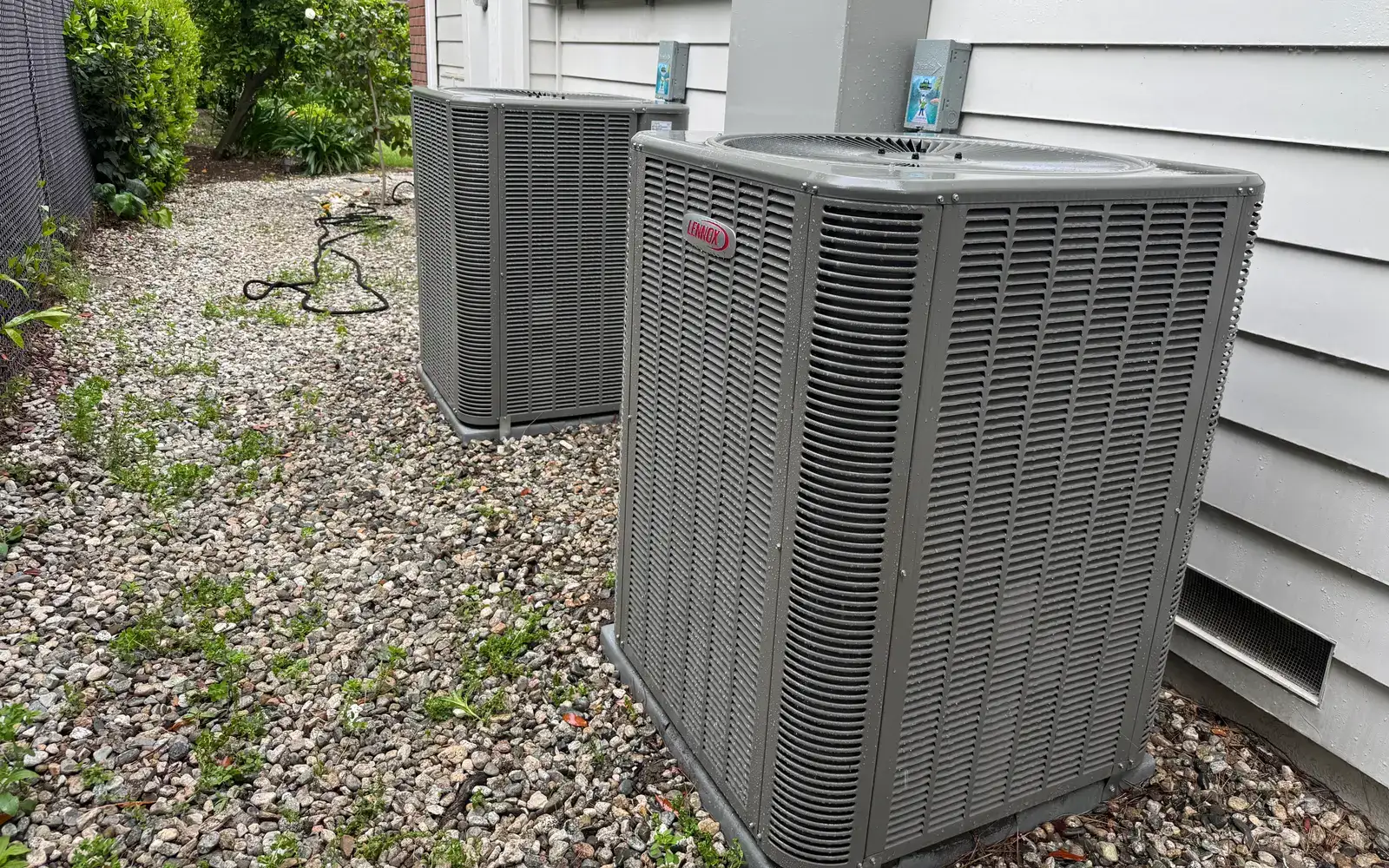
If those signs sound like your house, the next question splits two ways. Plenty of homes have no cooling but do have ducts: many mid-century ranch houses in Arcadia, Monrovia, Burbank and Glendale were built with ducted forced-air heating and never got a matching cooling coil.
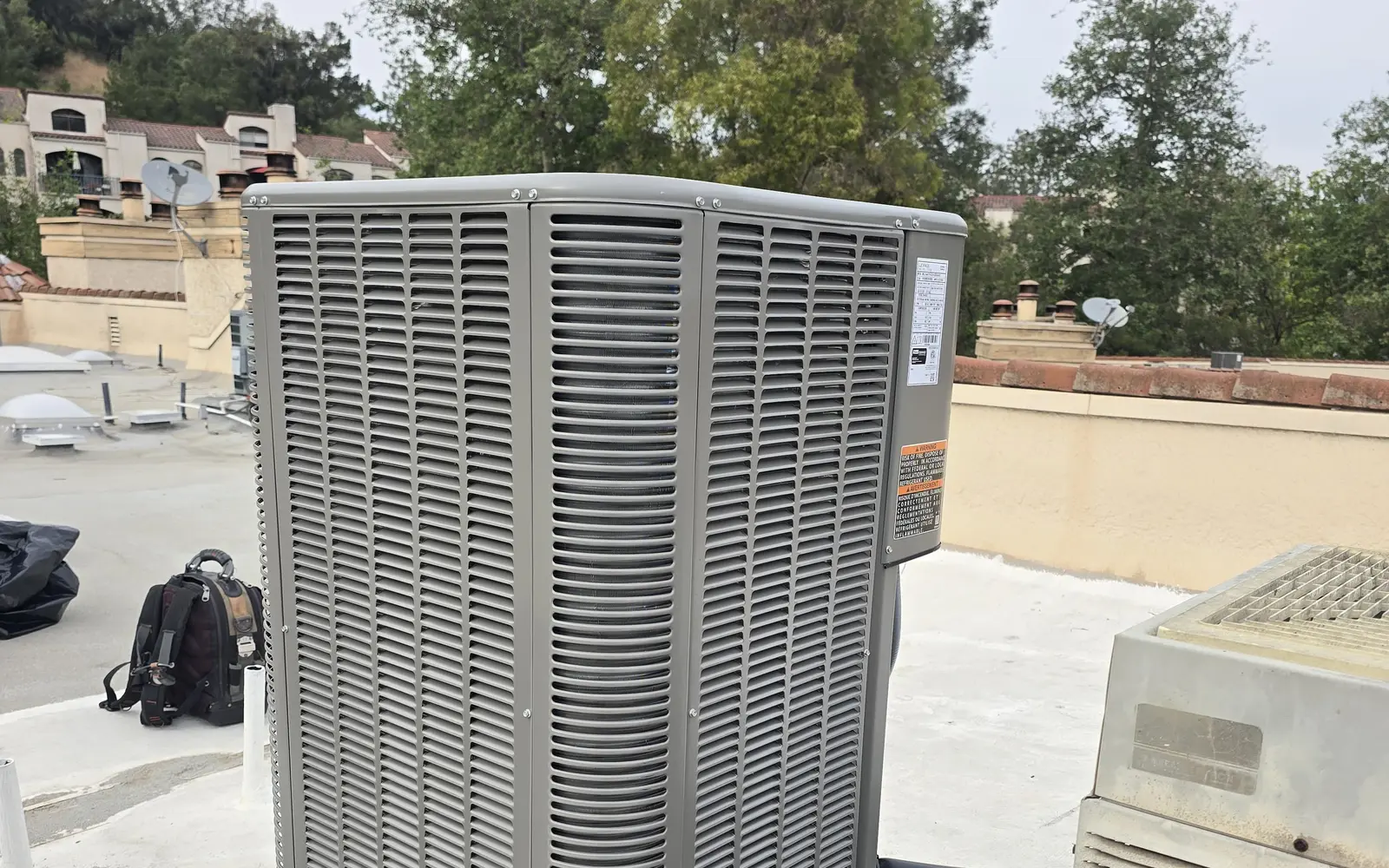
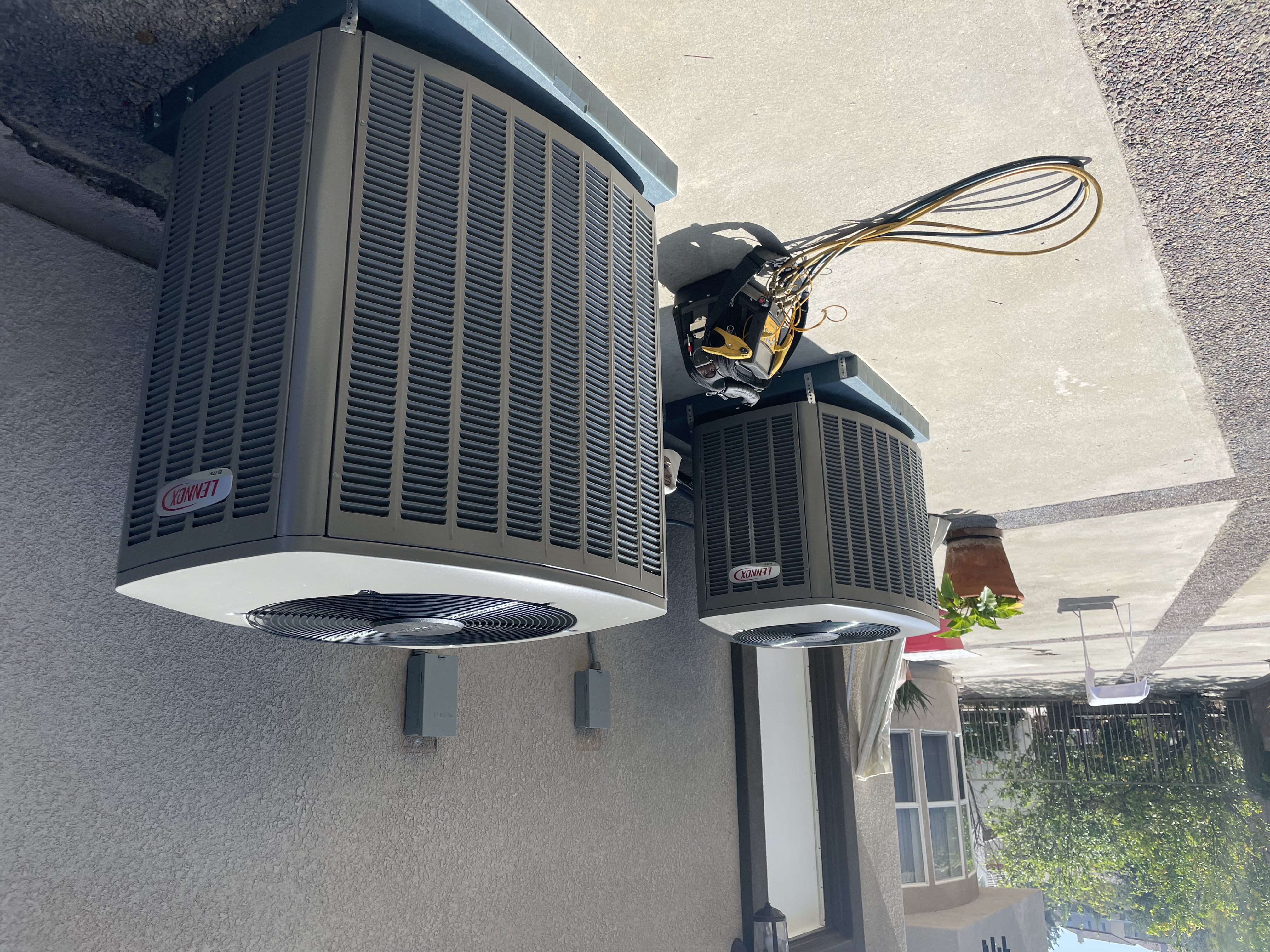
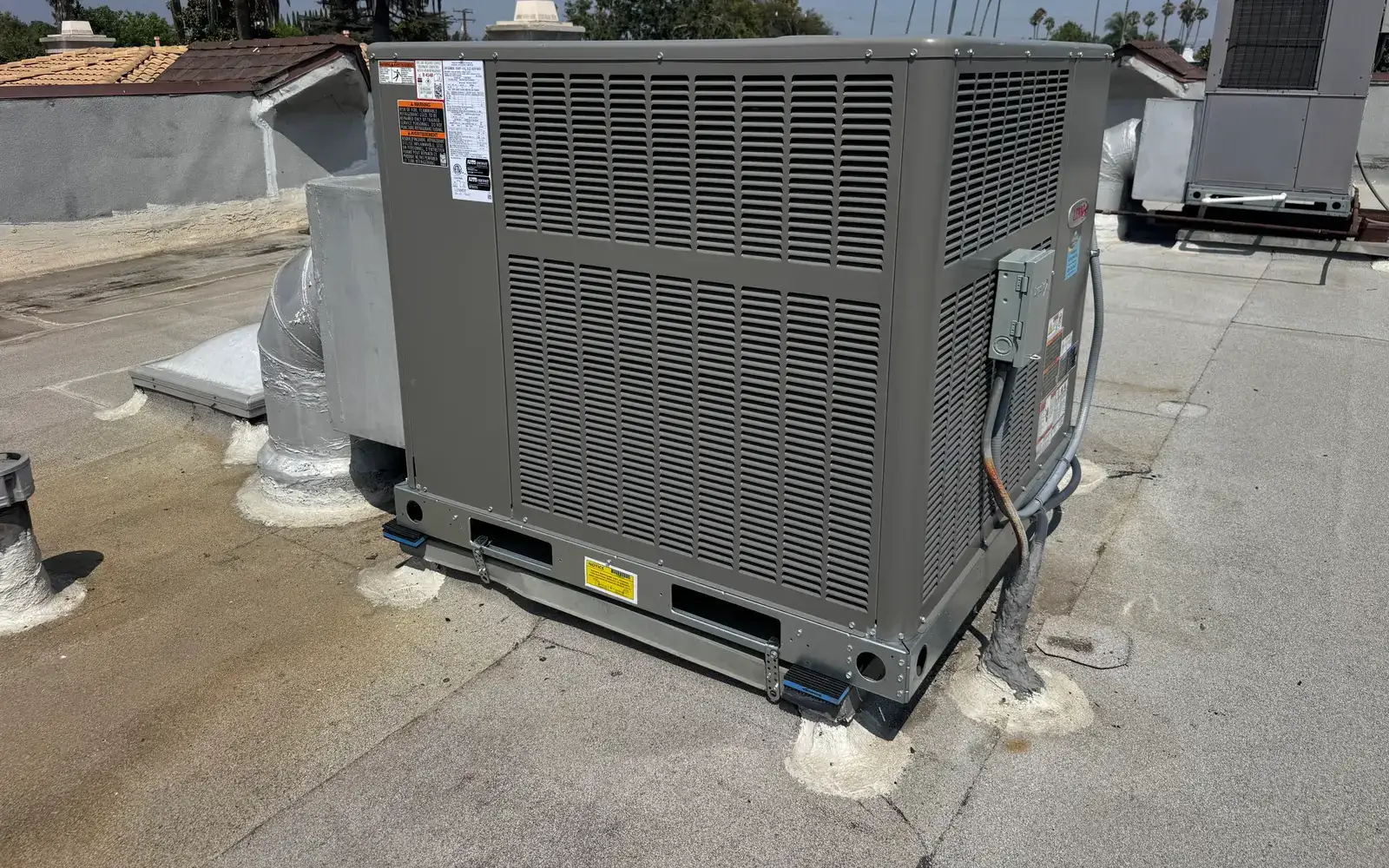
That is the easier of the two. Adding cooling means an outdoor condensing unit, the box outside that sheds the heat, plus an indoor coil at the furnace or air handler already there. The air handler is the cabinet holding the blower, and the coil is where refrigerant pulls heat out of the air passing over it. The ducts stay as they are. That is adding central air conditioning to a home that already has ductwork.
Two caveats. Ducts that have carried nothing but heat for decades deserve a look before they carry cooling. And age matters: a well-maintained air conditioner lasts 10 to 15 years, and a system still running on R-22, a refrigerant phased out for environmental reasons, is another sign the end is close.
One thing does change: the whole house answers to a single thermostat instead of a dial per unit. We cover what room sensors change once one thermostat runs the whole house separately.
If Your Home Has No Ductwork at All
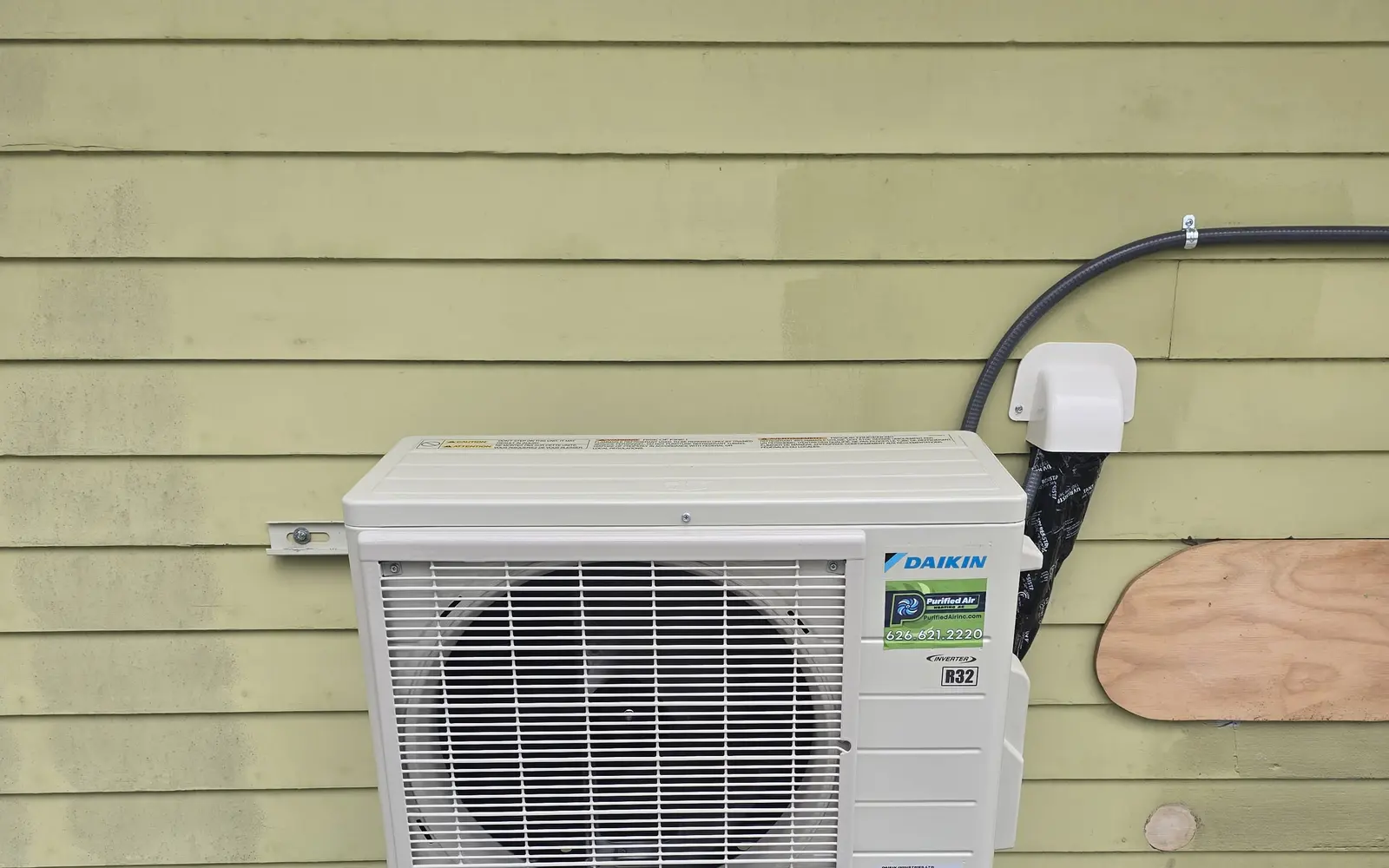
The other case is the true no-duct house. Many Craftsman bungalows and 1920s revival homes across Highland Park, Eagle Rock, Silver Lake and near South Pasadena were built without ductwork, and plenty still have none.
What makes them hard to retrofit is almost never willingness. It is the physical route: no mechanical closet, no attic duct chase, no crawlspace path sized for standard ductwork. There are two established ways around it.
The first is a ductless mini-split. A heat pump moves heat rather than making it, pulling warmth from outside air in winter and reversing in summer. A mini-split is that arrangement without ducts: an outdoor unit joined by a small insulated refrigerant line to one or more indoor heads, each its own zone. Energy Star points to ductless systems for older homes that never had central air, and because nothing burns, no combustion gases are produced indoors.
We see this work in Craftsman homes in Eagle Rock, where a full duct retrofit was never a realistic conversation. For houses like those, a ductless heat pump system is usually where the discussion lands.
There is also the small-duct, high-velocity route: flexible tubing about two inches across, fished through existing walls, floors and ceilings instead of needing a duct chase. Some owners of vintage houses go that way.
Either path is worth checking against current utility incentives, since what is on offer depends on which utility bills you and the programs change.
Sizing a Room Unit the Right Way
If you are not upgrading this year, buy the right size. Capacity is measured in BTU per hour, British Thermal Units: how much heat a unit can move out of a room in an hour.
Energy Star's room air conditioner sizing chart is the plain-English version: about 5,000 BTU per hour for a room of 100 to 150 square feet, about 7,000 at 250 to 300, about 12,000 at 450 to 550. Then adjust:
- A very sunny room: increase capacity by about 10 percent.
- A heavily shaded room: reduce it by about 10 percent.
- More than two people in the room regularly: add 600 BTU for each additional person.
- A kitchen: add 4,000 BTU.
Then resist the urge to round up. An oversized air conditioner costs more to buy, wastes energy and does not cool better. It satisfies its thermostat quickly, shuts off, and never runs long enough to pull moisture out of the air, so a room can end up cool and clammy at once. Federal purchasing guidance makes the same point about short cycling, when equipment runs in bursts instead of steadily.
Getting More Out of the Units You Already Have
Say you are keeping the window units another season. That is a fair call, and window AC maintenance usually gets described as "change the filter," which leaves out most of it.
The seal is the part nearly everyone skips. A Department of Energy field study on window AC installation found that installing a window unit left air leakage equivalent to a five square inch hole in the outside wall, and that air sealing around the window and the unit is what reduces it. Some cooled air also gets pulled straight back into the unit, since the outlet and intake sit so close together.
The rest of the list doubles as the answer to how to make a window AC colder:
- Check the seal around the unit and the window sashes, not just the accordion panels.
- Keep the filter clean. It costs the least and changes the most.
- Clean the intake and exhaust grilles periodically, indoors and out.
- Look at the coil once a year and straighten bent fins with a fin comb.
- Pass a stiff wire through the drain channel so water does not back up.
- At season's end, take the unit out or seal it from the inside. Otherwise air leaks through it all winter.
Plug a window unit directly into a wall outlet rather than an extension cord. These units draw a lot of current.
Talking It Through Before Next Summer
Whichever way your house points, the next step is the same: someone measuring the actual load and what is physically possible there, rather than guessing from square footage. And if keeping the window unit one more season is the sensible answer, we will say so plainly.
If you want to talk through whole-home cooling options for an older house, we are glad to come look and tell you honestly what fits it. Purified Air is a family-owned, Lennox Certified team based in Pasadena, serving the San Gabriel Valley and the nearby neighborhoods of Los Angeles. Call us at 626-621-2220.